
Home » College SAT Score Ranges, Costs, and Programs by Major and State » Best Pre-Med Colleges » Pre-Med Colleges in Alabama: ACT and SAT Scores, Costs, and Programs
By Glyn Caddell, BSME · Author of Digital SAT Math Secrets · Tutoring since 2008 — Updated October 18, 2026
Eighteen Alabama colleges with pre-med programs, what they cost, and the ACT scores of the students they admit.
The University of Alabama at Birmingham reports the highest admitted scores in the state, admits 88% of applicants, charges the lowest in-state tuition of any Alabama public university, and is where the state’s main medical school sits.
The ACT appears as a composite because that is how these colleges report it, and the SAT appears by section for the twelve that report it, because a student at 650 Reading & Writing and 540 Math is in a different position from a student at 540 and 650.
Two abbreviations matter later on this page. MD is the degree awarded by most medical schools in the United States. DO is the degree awarded by colleges of osteopathic medicine, and DO holders are licensed physicians with the same practice rights. Alabama has two of each, and both of its osteopathic schools are private.
Table of Contents
- Alabama Pre-Med Colleges by ACT Score
- Which Alabama College Is Hardest to Get Into?
- Does Any Alabama Scholarship Require a Test Score?
- What Medical Schools Are in Alabama?
- Where the SAT and the ACT Disagree in Alabama
- What If Your Scores Are Below the Range You Want?
Alabama Pre-Med Colleges by SAT Score
The table below covers four-year public and non-profit institutions in Alabama awarding bachelor’s degrees or higher, with at least 1,000 undergraduates, that report an admit rate or admitted test scores. Eighteen institutions meet that description, thirteen public and five private.
The table leads with the ACT because that is what Alabama’s colleges publish. Fifteen of these institutions report an ACT composite and twelve report SAT sections. Three report the ACT with no SAT at all, and not one reports the SAT without also reporting the ACT.
Colleges are sorted by the midpoint of the ACT composite range, with ties broken on the ACT 75th percentile and then on size. Three pairs share a range, so the tiebreak does real work. The three institutions reporting no scores of any kind go last, ordered by size.
| College | ACT composite | Reading & Writing | Math | Cost of attendance | Undergraduates | Admit rate |
|---|---|---|---|---|---|---|
| Auburn University | 26 to 31 | 630 to 690 | 630 to 700 | $34,919 | 26,816 | 46% |
| The University of Alabama | 24 to 31 | 590 to 690 | 580 to 710 | $33,382 | 33,227 | 77% |
| University of Alabama in Huntsville | 24 to 31 | 600 to 690 | 610 to 720 | $27,392 | 6,591 | 69% |
| University of Alabama at Birmingham | 23 to 30 | 600 to 710 | 610 to 740 | $28,145 | 11,635 | 88% |
| Samford University | 22 to 28 | 550 to 640 | 520 to 610 | $57,456 | 4,206 | 82% |
| University of Mobile | 22 to 28 | Not reported | Not reported | $41,115 | 1,307 | 78% |
| University of South Alabama | 20 to 26 | 500 to 610 | 470 to 580 | $25,476 | 8,879 | 71% |
| Troy University | 18 to 25 | 490 to 620 | 450 to 590 | $23,165 | 9,805 | 96% |
| Tuskegee University | 18 to 25 | Not reported | Not reported | $43,454 | 2,630 | 49% |
| Auburn University at Montgomery | 18 to 24 | 538 to 603 | 498 to 600 | $21,353 | 2,542 | 92% |
| Jacksonville State University | 17 to 24 | 500 to 630 | 500 to 660 | $24,257 | 7,036 | 78% |
| Faulkner University | 18 to 21 | Not reported | Not reported | $37,626 | 1,549 | 73% |
| University of West Alabama | 16 to 21 | 440 to 560 | 420 to 560 | $22,758 | 2,974 | 43% |
| Alabama State University | 15 to 20 | 399 to 505 | 350 to 462 | $23,586 | 3,477 | 98% |
| Alabama A & M University | 14 to 19 | 420 to 530 | 390 to 510 | $27,153 | 6,124 | 58% |
| University of North Alabama | Not reported | Not reported | Not reported | $23,786 | 5,811 | 87% |
| University of Montevallo | Not reported | Not reported | Not reported | $27,398 | 2,151 | 54% |
| Oakwood University | Not reported | Not reported | Not reported | $40,176 | 1,153 | 45% |
Each range covers the middle 50% of admitted students who submitted that score. A quarter scored below the lower number, and the top quarter scored at or above the upper one. Being under the lower number does not rule a student out, and being just above it is not as safe as it looks. For the three colleges reporting no score of any kind, there is no published figure to compare against.
Five things in the table are worth saying before the entries.
The University of Alabama at Birmingham reports the highest admitted SAT scores in Alabama, at 600 to 710 in Reading & Writing and 610 to 740 in Math, while admitting 88% of applicants and charging $9,098 in in-state tuition and fees, the lowest of any public university in the state. Its Math 75th percentile of 740 is the highest figure on this page.
In-article image 1 Shows: the twelve institutions reporting both tests ranked by ACT beside the same twelve ranked by SAT, with UAB’s two positions joined Alt text: Alabama colleges ranked by admitted ACT score beside the same colleges ranked by admitted SAT score File name: alabama-act-versus-sat-ranking Size: 2760×1440
Those two rankings are not the same, and the same university ranks first on one test and fourth on the other. UAB leads the state on the SAT and sits fourth on the ACT composite, behind Auburn, The University of Alabama and Huntsville. A student comparing Alabama colleges on one test should not assume the order holds on the other, and the section near the end of this page works through where the two diverge.
Auburn University is the third most selective institution in Alabama, behind the University of West Alabama and Oakwood University. The next section sets out the full order, along with a caution about the institution at the top of it.
The five private colleges hold the five highest costs of attendance and the thirteen public universities hold the thirteen lowest, with no overlap between them. Samford at $57,456 is the most expensive and Auburn University at Montgomery at $21,353 the least, a spread of approximately 2.7 to one.
Auburn and The University of Alabama charge non-residents approximately $22,000 more than residents, at $22,032 and $21,992. That is approximately double every other public university in the state, where the gaps run from $8,328 at Alabama State to $14,276 at Huntsville.
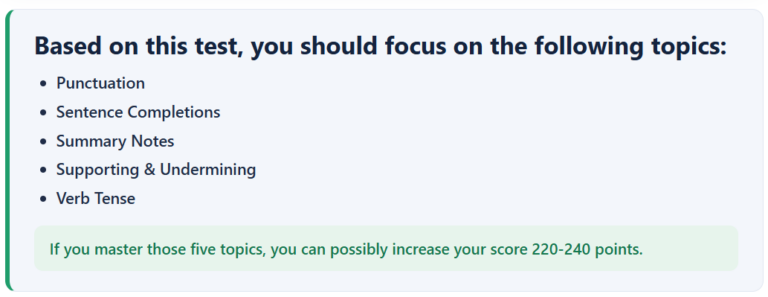
Want to Know What 5 Topics Will Improve Your SAT Score the Most?
Sample Feedback from our Diagnostic Test:
University of Alabama at Birmingham
The University of Alabama at Birmingham is a public research university and the state’s principal academic medical center, with 11,635 undergraduates and the Heersink School of Medicine on the same campus. It admits 88% of applicants.
Admitted students scored 600 to 710 in Reading & Writing and 610 to 740 in Math, the highest figures in Alabama, with an ACT range of 23 to 30. The top quarter sat at or above 710 and 740. Cost of attendance is $28,145, and in-state tuition and fees of $9,098 are the lowest of any public university on this page, against $22,562 for non-residents.
An 88% admit rate alongside the state’s highest reported scores normally indicates a self-selecting applicant pool rather than a loose standard. For a pre-med student the combination is unusual in a useful way, because the cheapest public university for an Alabama resident is also the one attached to the medical school.
Auburn University
Auburn University is a public land-grant research university in Auburn with 26,816 undergraduates, and it reports the highest ACT range in the state. It admits 46% of applicants.
Admitted students scored 26 to 31 on the ACT, with SAT sections of 630 to 690 in Reading & Writing and 630 to 700 in Math. The top quarter sat at or above 31, 690 and 700. Cost of attendance is $34,919, with in-state tuition and fees of $12,890 against $34,922 for non-residents.
Auburn is the most selective institution most Alabama students actually apply to, and the private osteopathic campus covered later on this page sits in the Auburn University Research Park.
University of Alabama in Huntsville
The University of Alabama in Huntsville is a public research university with 6,591 undergraduates, and it admits 69% of applicants, the seventh-lowest rate in the state. It reports an ACT range of 24 to 31, matching Tuscaloosa’s.
Admitted students scored 600 to 690 in Reading & Writing and 610 to 720 in Math, and that Math 75th percentile of 720 is the second highest on this page. Cost of attendance is $27,392, with in-state tuition and fees of $12,132 against $26,408 for non-residents.
Huntsville reports scores close to UAB’s at a lower cost of attendance, which makes the two the natural comparison for a student who wants a research university without Auburn’s admit rate.
The University of Alabama
The University of Alabama is the state’s largest institution, in Tuscaloosa, with 33,227 undergraduates. It admits 77% of applicants and reports an ACT range of 24 to 31.
SAT sections run 590 to 690 and 580 to 710. Cost of attendance is $33,382, with in-state tuition and fees of $12,180 against $34,172 for non-residents, a gap of $21,992 that is nearly identical to Auburn’s.
Alabama is tenth in the state by admit rate despite being the best-known name on this page. The next section covers that gap between reputation and selectivity.
Samford University
Samford University is a private Christian university in Homewood, just outside Birmingham, with 4,206 undergraduates. Its cost of attendance of $57,456 is the highest in the state, with tuition and fees of $40,150, and it admits 82% of applicants.
Reported ranges are 22 to 28 on the ACT and 550 to 640 and 520 to 610 on the SAT sections. Samford is the largest private institution on this page and the one where the Alabama Student Grant Program covered below is worth the most in practice.
University of Mobile
The University of Mobile is a private Baptist university in Mobile with 1,307 undergraduates. It admits 78% of applicants and reports an ACT range of 22 to 28 with no SAT range, one of three institutions here publishing the ACT alone.
Cost of attendance is $41,115, with tuition and fees of $26,910.
University of South Alabama
The University of South Alabama is a public research university in Mobile with 8,879 undergraduates, and the Whiddon College of Medicine sits on its campus. It admits 71% of applicants.
Admitted students scored 500 to 610 in Reading & Writing and 470 to 580 in Math, with an ACT range of 20 to 26. Cost of attendance is $25,476, with in-state tuition and fees of $10,116 against $19,092 for non-residents.
South Alabama is the second of the two campuses in this table with an MD program on it, and its two reported score sets diverge by enough to appear in the concordance section below.
Troy University
Troy University is a public university in Troy with 9,805 undergraduates, and it admits 96% of applicants, the second-highest rate on this page. It reports an ACT range of 18 to 25.
SAT sections run 490 to 620 and 450 to 590. Cost of attendance is $23,165, with in-state tuition and fees of $10,176 against $20,352 for non-residents.
Tuskegee University
Tuskegee University is a private historically Black university in Tuskegee with 2,630 undergraduates, and it admits 49% of applicants, the fourth-lowest rate in the state. It reports an ACT range of 18 to 25 and no SAT range.
Cost of attendance is $43,454, the second highest here, with tuition and fees of $25,386. Tuskegee is more selective than eleven of the institutions above it in this table while publishing no SAT figures at all.
Auburn University at Montgomery
Auburn University at Montgomery is a public university with 2,542 undergraduates, and its cost of attendance of $21,353 is the lowest on this page. It admits 92% of applicants.
Reported ranges are 18 to 24 on the ACT and 538 to 603 and 498 to 600 on the SAT sections. In-state tuition and fees are $9,700 against $20,668 for non-residents.
Jacksonville State University
Jacksonville State University is a public university in Jacksonville, in northeast Alabama, with 7,036 undergraduates. It admits 78% of applicants and reports an ACT range of 17 to 24.
Cost of attendance is $24,257. In-state tuition and fees are $12,894, the second highest of any public university here, against $23,334 for non-residents. Admitted students scored 500 to 630 in Reading & Writing and 500 to 660 in Math.
Jacksonville State’s SAT Math 75th percentile of 660 is difficult to square with an ACT 75th percentile of 24, and the concordance section explains why that matters.
Faulkner University
Faulkner University is a private Christian university in Montgomery with 1,549 undergraduates. It admits 73% of applicants and reports an ACT range of 18 to 21, the narrowest on this page, with no SAT range.
Cost of attendance is $37,626, with tuition and fees of $23,920.
University of West Alabama
The University of West Alabama is a public university in Livingston with 2,974 undergraduates, and its published admit rate of 43% is the lowest in the state. It reports an ACT range of 16 to 21 and SAT sections of 440 to 560 and 420 to 560.
Cost of attendance is $22,758, with in-state tuition and fees of $10,990 against $20,090 for non-residents.
Those two figures do not sit easily together. A 43% admit rate normally accompanies scores well above the state median, and West Alabama’s are the second lowest on this page. The next section covers what that means for a student reading the number.
Alabama State University
Alabama State University is a public historically Black university in Montgomery with 3,477 undergraduates, and it admits 98% of applicants, the highest rate in the state. It reports an ACT range of 15 to 20 and SAT sections of 399 to 505 in Reading & Writing and 350 to 462 in Math.
Cost of attendance is $23,586. In-state tuition and fees are $11,248 against $19,576 for non-residents, and that $8,328 gap is the smallest of any public university on this page.
At a 98% admit rate a published range describes the students who enrolled rather than a standard anyone had to clear, and the section on reading these ranges returns to that point.
Alabama A & M University
Alabama A&M University is a public historically Black land-grant university in Normal, near Huntsville, with 6,124 undergraduates. It admits 58% of applicants and reports an ACT range of 14 to 19, with SAT sections of 420 to 530 and 390 to 510.
Cost of attendance is $27,153, with in-state tuition and fees of $10,024 against $18,634 for non-residents.
University of North Alabama
The University of North Alabama is a public university in Florence with 5,811 undergraduates. It admits 87% of applicants and publishes no admitted score ranges of any kind.
Cost of attendance is $23,786, with in-state tuition and fees of $12,120 against $22,320 for non-residents.
University of Montevallo
The University of Montevallo is a public liberal arts university in Montevallo with 2,151 undergraduates. It admits 54% of applicants, which makes it more selective than thirteen of the institutions above it, and it publishes no admitted score ranges.
In-state tuition and fees of $13,948 are the highest of any public university in Alabama, higher than Auburn or Tuscaloosa, against $26,968 for non-residents. Cost of attendance is $27,398.
A selective public university charging residents more than the flagships and publishing nothing about the students it admits is an awkward combination for a student trying to plan, and Montevallo is the clearest case of it here.
Oakwood University
Oakwood University is a private historically Black Seventh-day Adventist university in Huntsville with 1,153 undergraduates, the smallest institution in this table. It admits 45% of applicants, the second-lowest rate in the state, and publishes no admitted score ranges.
Cost of attendance is $40,176, with tuition and fees of $22,512, the lowest tuition of the five private institutions here.
Which Alabama College Is Hardest to Get Into?
On published admit rates the most selective institution in Alabama is the University of West Alabama at 43%, followed by Oakwood University at 45% and Auburn University at 46%.
That order will surprise most readers. Auburn is third, and the two institutions ahead of it are a 2,974-student regional public university and a 1,153-student private university. Tuskegee follows at 49%, Montevallo at 54% and Alabama A&M at 58%.
In-article image 2 Shows: the eighteen institutions ordered by admit rate with the three most selective labeled Alt text: Alabama colleges ordered by admit rate with the three most selective identified File name: alabama-colleges-by-admit-rate Size: 2760×1440
Laid out in order, the best-known university in the state is the third hardest to get into. The University of Alabama is tenth at 77%, behind seven institutions a reader is unlikely to have been weighing.
West Alabama’s position at the top needs a caution rather than a celebration. Its 43% admit rate sits alongside an ACT range of 16 to 21 and SAT sections of 440 to 560 and 420 to 560, the second lowest scores on this page. A selective admit rate and near-bottom scores do not describe the same kind of institution, and nothing published explains the combination. A small or unusual applicant pool would, and so would a program-specific admissions structure, and so would a reporting problem. This page does not know which.
Both figures stay here and neither is reconciled. A student considering West Alabama should ask its admissions office how many applicants it received last year and from what pool, because the admit rate on its own gives a misleading impression of what the place asks for.
The other end of the range matters more to most readers. Alabama State admits 98%, Troy 96%, Auburn University at Montgomery 92% and UAB 88%. The state runs from 43% to 98%, and for most of this table a score is one input among several rather than a gate.
Does Any Alabama Scholarship Require a Test Score?
No Alabama state financial aid program described in the Alabama Commission on Higher Education’s 2026 report to the legislature requires an ACT or SAT score, and the report describes no merit-based aid program at all. Its only reference to the ACT is an unrelated readiness statistic.
The Alabama Student Grant Program is the one a pre-med reader most needs to understand, and its restriction is the point. It is for Alabama residents attending eligible private non-profit institutions in the state, it is not need-based, and it pays up to $3,000 a year depending on fund availability. In 2026 it supported 5,435 students with $9,592,158 allocated, against 4,957 students and $9,946,495 in 2025.
Set against this table, that restriction has a sharp consequence. The grant is worth up to $3,000 at Samford, Tuskegee, the University of Mobile, Oakwood or Faulkner, and nothing at UAB, which charges residents $9,098. So the only state grant that is not need-based reaches only the five most expensive institutions on this page.
The Alabama Student Assistance Program is need-based and available at eligible public and private institutions. It supported 11,790 students with $9,698,099 allocated in 2026. The report does not state an award amount, so none appears here.
Two smaller programs are worth knowing. The (Re)Engage Alabama Grant supports adult learners aged at least 22 who hold college credit but no degree, and in 2026 it funded 46 participants with $127,750 allocated and $993,625 earmarked for completion. The Alabama Law Enforcement Officers’ Family Scholarship covers tuition and mandatory fees at accredited Alabama public institutions for dependents and spouses of qualifying officers.
Alabama’s grant design is not unusual in this series, and it has an exact counterpart. Virginia’s Tuition Assistance Grant is also restricted to private non-profit colleges and also pays nothing at any public university. Washington’s College Grant runs the other way entirely, paying the most at the public research universities and nothing at a for-profit. Two of those three states decided the grant should follow the student to the private sector, and one decided it should follow him to the public one.
Every Alabama Junior Takes the ACT at School
The Alabama State Department of Education states that the ACT with Writing is administered to all grade 11 students enrolled in Alabama public high schools, and that since 2017-18 it has been the accountability measure for high school assessments in mathematics, English and science.
Nearly every Alabama student therefore has an ACT score without arranging a weekend test, and that is why fifteen of the eighteen institutions in the table report the ACT and three report nothing else.
One thing the Department’s pages do not address is worth asking a district about rather than assuming. They do not say whether the test is free to students or who pays for it.
In-article image 3 Shows: four states that test every junior, with the test each administers and what a score is worth in each Alt text: Four states compared by which college entrance test they administer to all juniors and what a score earns in each File name: four-states-universal-testing-compared Size: 2760×1440
Alabama is the fourth state covered in this series that gives every junior a college entrance test, and four states give every junior the same kind of test and pay for it four different ways. West Virginia tests on the SAT and makes the score the scholarship itself, at a threshold sitting above the bottom quarter of every admitted class in that state. Wisconsin tests on the ACT and asks for no score in any state program. Wyoming tests on the ACT and turns the score into a four-tier ladder where each band is worth $1,180 a year. Alabama tests on the ACT, asks for no score either, and restricts its main grant by sector instead.
Alabama and Wisconsin are the closest pair of the four. Both give every junior the ACT, both have more colleges reporting the ACT than the SAT, and neither attaches a state dollar to the result.
What Medical Schools Are in Alabama?
Alabama has four medical schools. Two award the MD and two award the DO, and both osteopathic schools are private.
The UAB Heersink School of Medicine in Birmingham is public and is the state’s principal academic medical center, on the campus that is row four of the table above. Its entering class of 2030 brought in 207 students, selected from almost 4,000 applicants.
The University of South Alabama Whiddon College of Medicine in Mobile is public, on the campus that is row seven of the table. Both of Alabama’s MD programs therefore sit on undergraduate campuses that appear in this table, the same pattern the West Virginia page described.
The Alabama College of Osteopathic Medicine in Dothan is a private non-profit standalone institution awarding the DO. It initially recruited up to 162 students per class, and in 2018 the Commission on Osteopathic College Accreditation approved an expansion to up to 210 per class. Its own page states that at least half of each class comes from the Southeast, primarily Alabama and Florida, and it publishes no Alabama-specific share, so none appears here.
At up to 210 students a class, the osteopathic school in Dothan is approved for an entering class about the size of UAB’s, which few readers would guess from the relative profiles of the two institutions.
The Edward Via College of Osteopathic Medicine operates its Auburn campus in the Auburn University Research Park, built in 2014, and awards the DO. The college states that the degree is conferred solely by the Edward Via College and not by Auburn University, and that is worth saying plainly because the campus name invites the opposite assumption. VCOM publishes a college-wide figure of 150 to 162 students per class and 600 in total rather than a per-campus number, so no class size is attributed to Auburn here.
That same college appears on the Virginia page in this series, where it was confirmed as private non-profit with a collaborative agreement with Virginia Tech rather than as a Virginia Tech school. One osteopathic college, two state pages, two university partners, and its own degree in both places.
This page is thinner on residency than most in the series, and the reason should be stated rather than disguised. Neither Alabama public medical school’s Alabama resident share nor its residency policy was established from the school’s own published materials while this page was written. Those figures are not taken from third-party admissions guides, so a student who needs them should ask UAB and South Alabama directly.
The standard caution applies. Attending the undergraduate campus attached to a medical school helps with shadowing, research access and knowing the faculty, and it does not improve admission odds by itself. UAB is an unusual case on this page only because the undergraduate campus, the medical school and the lowest in-state tuition in the state happen to be the same place.
Thirteen States, Thirteen Different Residency Rules
Alabama joins Wisconsin as a state where a pre-med student cannot look up where residency leaves him, because neither public medical school publishes a rule in the form the other states in this series did.
Wyoming has no medical school at all and buys twenty seats at the University of Washington, with a three-year Wyoming practice contract attached to each. Wisconsin publishes almost nothing. West Virginia has two public MD schools running opposite rules, with Marshall stating that other non-residents are not considered. Washington reserves approximately 95% of 280 seats for five states and admits out-of-region applicants at a three-year average of 0.5%. Texas caps non-residents at 10% of every public class by statute. Utah publishes a 132-seat table reserving 90 for residents. North Carolina’s Brody School of Medicine bars applicants who are neither residents nor recent UNC System graduates. Tennessee’s UTHSC caps out-of-state admissions at approximately 10%. Oregon’s OHSU writes four criteria into a numbered policy. South Dakota’s Sanford grants residents an interview. North Dakota’s UND ranks a state degree inside a preference order. Vermont’s published policy governs tuition rather than admission.
Across thirteen states examined this way, two findings hold. Residency matters more than almost anything a student controls, and no two states express it the same way. Some publish a number, some publish a rule, some buy seats in another state, and some publish nothing at all. A student should look up his own state rather than reason from a national average, because there is no national average to reason from.
Where the SAT and the ACT Disagree in Alabama
Alabama is the second state in this series where the two tests do not disagree in the direction the series expected, and at two institutions the gap is wide enough to flag.
One correction applies first. Adding two SAT section percentiles together overstates a real composite by approximately 20 points at each end, because no single student sits at the same percentile in both sections, and every figure below carries that adjustment.
The pattern this series established across several states is that the minority test in a state reads higher, because the smaller group who sit it are self-selected rather than a cross-section. Alabama gives every junior the ACT, so the SAT is the minority test here and should read high. It does at four of the twelve institutions reporting both.
Taking the lower end first and then the upper, UAB reads 50 points high and 60 high. Jacksonville State reads 50 and 90 high. Auburn University at Montgomery reads 46 high and 3 high. Huntsville reads 10 high and 10 low. Auburn is level and then 30 low. Alabama A&M reads 10 low and 10 high. The University of Alabama reads 30 and 20 low. Troy reads 50 and 20 low. West Alabama reads 50 low and 20 high. Samford reads 60 and 80 low. South Alabama reads 90 and 70 low. Alabama State reads 121 and 93 low.
So eight read low at the lower end and four read high, against an expectation that most would read high.
That matters beyond Alabama, because it is now possible to say when the rule works. The pattern held in every state in this series where the SAT was the majority test, including all ten reporting institutions in West Virginia. It has now failed in two of the three states where the ACT is the majority test, at Wisconsin and here, holding only in South Dakota. The rule is not symmetric. It is reliable where the SAT dominates and unreliable where the ACT does.
There is a likely reason and it is a hypothesis rather than a finding. In a state where everyone sits the ACT, the smaller group who also sit the SAT are normally choosing it for particular colleges rather than being sorted into it by a statewide testing program, so the selection works differently from the other direction. This page does not claim to have settled it.
Two rows deserve a student’s attention. Alabama State’s adjusted SAT range of 729 to 947 sits far below its ACT equivalent of 850 to 1040, the widest gap in the state. Jacksonville State runs the other way, reporting SAT Math of 500 to 660 against an ACT of 17 to 24, and an SAT Math 75th percentile of 660 is hard to reconcile with an ACT 75th percentile of 24.
Both are questions about the reporting rather than about the applicants. Both figures stay on this page in each case, neither is reconciled, and a student considering either institution should ask its admissions office which number describes the class he would be joining.
What If Your Scores Are Below the Range You Want?
An Alabama student whose score sits below the range he wants should know first that no state scholarship in Alabama asks for a score at all. What the number affects is admission at a handful of institutions and the strength of an application everywhere else.
Four places on this page are where it still decides something, and the table gives the distances.
Auburn University at 46% is the clearest case and the one that matters to the largest number of Alabama students. It reports an admitted ACT range of 26 to 31 and SAT sections of 630 to 690 and 630 to 700, the highest ACT figures in the state.
The University of Alabama at 77% and Huntsville at 69% both report an ACT range of 24 to 31, so the published ranges at those two are close to Auburn’s while the admit rates are not.
UAB at 88% is the honest middle case. The admit rate is high and the reported scores are the highest in the state, so a strong score there is evidence in a file rather than a gate to clear. Both halves of that are true at once.
Oakwood at 45%, Tuskegee at 49% and Montevallo at 54% are three of the more selective institutions in Alabama, and two of the three publish no score ranges while the third publishes the ACT only. At those three there is little or nothing to aim at. That is a real problem for a student trying to plan, and worth saying plainly.
Out-of-state applications are the fourth, and Alabama’s arrangements do not travel. A student applying to a college in another state is governed by that college’s rules.
The state scholarship point here is an absence rather than a target. A better score does not unlock state money in Alabama. It can unlock institutional money, and merit aid at the public universities is normally where a strong ACT pays in this state, but those awards are set by each university rather than by the state and this page does not list amounts for them. A student near the top of a university’s range should ask that university’s financial aid office what his score is worth there.
Our students since 2008 have normally needed approximately 40 hours of focused work to move a score meaningfully and approximately 80 hours for a larger jump. An ACT point is worth approximately 25 to 30 SAT points, so those hours convert between the tests.
An Alabama student should put those hours into the ACT. He sits it at school in eleventh grade whether or not he prepares, fifteen of the eighteen institutions here report it, and three of them report nothing else.
The honest close for Alabama is narrower than for most states in this series. A test score is worth preparing for because of where it helps a specific application and what a particular university may pay for it, not because the state has attached money to the number. Saying that narrowly is the point, because a page that promised more would be describing a different state.
A student in one of those four situations should sit a full timed test before committing the hours. Take a free diagnostic and work from a real score rather than an impression of one. Our guide on how to improve your ACT score sets out the method, and the conversion above makes it apply to the SAT.
Should an Alabama Student Take the SAT or the ACT?
An Alabama student should plan around the ACT.
The state administers the ACT with Writing to every grade 11 student in a public high school, so he has an ACT score by default and would have to arrange an SAT himself. Fifteen of the eighteen institutions on this page report an ACT composite and twelve report SAT sections, and at Tuskegee, Faulkner and the University of Mobile the ACT is the only published measure.
That is also why the table above leads with an ACT column rather than the SAT columns most pages in this series use. The column order follows what these colleges actually publish.
One warning follows from this page in particular. The two tests do not produce the same ranking in Alabama, and UAB is first by SAT and fourth by ACT. A student comparing colleges on one test should not assume the order holds on the other.
The case for adding the SAT is narrow. An application to a college in a state where the SAT dominates is the clearest one, and that includes much of the East Coast.
Pre-Med Programs in Nearby States
Alabama borders Tennessee, Georgia, Florida and Mississippi.
Tennessee makes the most useful comparison, and it runs directly against Alabama. Tennessee also gives its juniors a college entrance test, and its HOPE Scholarship makes a test score one of three qualifying routes to state money. Alabama asks for no score in any state program. Two neighboring states, the same universal testing, and opposite conclusions about what the score is for.
Leaving Alabama has a cost attached, though a modest one. The Alabama Student Grant Program does not travel, so a student who enrolls outside the state forfeits up to $3,000 a year, and it was only usable at an Alabama private college to begin with.
The border runs the other way for osteopathic medicine. The Edward Via College of Osteopathic Medicine runs the Auburn campus covered above and also appears on the Virginia page in this series, so a student weighing the DO is looking at the same college in two states.
Our pages for Tennessee, Georgia and Virginia cover the colleges, costs and medical school rules in each.
How to Read These Score Ranges
Every range on this page covers the middle 50% of admitted students who submitted scores. The lower number is the 25th percentile and the upper number is the 75th, which means a quarter of admitted students scored at or above it.
That upper number is the one to aim for.
Two schools here report no section data. That’s increasingly common, and it means the score carries less weight in those admissions than at a school that does report. It also means there’s no range to compare yourself against, so the rest of the application does more of the work.
Because most colleges are now test-optional, the ranges that are published describe only the students who chose to submit. Students with strong scores submit and students with weak ones don’t, so a published range sits higher than the range for everyone who was actually admitted. More on test-optional colleges.
See what SAT score you need for college for how to turn a score into a realistic list.
Pre-Med Colleges in Other States
Every state page in this series follows the same format, with admitted score ranges, costs, admit rates and each state’s own medical school and scholarship rules. Our pre-med colleges by state index lists all of them.

Glyn Caddell
Glyn Caddell holds a BS in Mechanical Engineering from NJIT and has been tutoring New York City students since 2008. He founded Caddell Prep in 2012 and is the author of Digital SAT Math Secrets: Lessons & Tricks to Quickly Improve to a Perfect 800 on the Math Test, which contains over 900 practice problems and is used in Caddell Prep’s SAT math classes. He is founding president of the Staten Island Technical High School alumni association and teaches every lesson on this site personally.
Finally, an SAT course that students actually understand
Every question has a video explanation. Not most — every one.
The on-demand Digital SAT course covers all 17 math topics and 15 reading and writing topics, with 5 full-length practice tests and a 100-point score increase guarantee. Keep access for the rest of high school. No subscription.
Want to Know What 5 Topics Will Improve Your SAT Score the Most?
Sample Feedback from our Diagnostic Test: