
Home » College SAT Score Ranges, Costs, and Programs by Major and State » Best Pre-Med Colleges » Pre-Med Colleges in West Virginia: SAT Scores, Costs, and Programs
By Glyn Caddell, BSME · Author of Digital SAT Math Secrets · Tutoring since 2008 — Updated October 17, 2026
Fourteen West Virginia colleges with pre-med programs, what they cost, and the SAT scores of the students they admit.
West Virginia’s merit scholarship asks for a test score that sits above the bottom quarter of every admitted class in the state, while eleven of these fourteen colleges carry an early guaranteed acceptance to the state’s osteopathic medical school on grades alone.
Scores are given by section rather than as a single total, because a student at 650 Reading & Writing and 540 Math is in a different position from a student at 540 and 650.
Two abbreviations matter later on this page. MD is the degree awarded by most medical schools in the United States. DO is the degree awarded by colleges of osteopathic medicine, and DO holders are licensed physicians with the same practice rights. West Virginia has two of the first and one of the second.
Table of Contents
- West Virginia Pre-Med Colleges by SAT Score
- What Score Does the PROMISE Scholarship Require?
- Can You Get Guaranteed Admission to a West Virginia Medical School?
- What Medical Schools Are in West Virginia?
- Every West Virginia Junior Takes the SAT at School
- One Admit Rate on This Page Is in Dispute
- What If Your Scores Are Below the Range You Want?
West Virginia Pre-Med Colleges by SAT Score
The table below covers four-year public and non-profit institutions in West Virginia awarding bachelor’s degrees or higher, with at least 500 undergraduates, that report an admit rate or admitted test scores. Fourteen institutions meet that description.
The threshold is 500 rather than the 1,000 these state pages normally use, and the reason is specific to West Virginia. At 1,000 undergraduates the table returns nine institutions and only one private college, because West Virginia’s private sector is made almost entirely of colleges enrolling between 500 and 1,000 students. A reader choosing among them deserves to see them.
Two institutions still fall outside it. Glenville State University has 1,096 undergraduates and is a four-year public university, and it is absent only because it reports neither an admit rate nor admitted scores. It appears later on this page as a medical school pipeline partner. West Virginia University at Parkersburg and Potomac State College of West Virginia University are predominantly associate-degree institutions and are not included.
Colleges are sorted by the midpoint of the two section ranges, with ties broken on the Math 75th percentile. The four colleges reporting no scores go last, ordered by size. There is no ACT column because the same ten institutions report both tests, so an ACT column would add nothing the table does not already carry. Where an ACT range is worth knowing, it appears in that college’s entry, and it matters in the scholarship section because the scholarship has an ACT route.
| College | Reading & Writing | Math | Cost of attendance | Undergraduates | Admit rate |
|---|---|---|---|---|---|
| West Virginia University | 520 to 620 | 490 to 600 | $26,415 | 17,385 | 89% |
| Marshall University | 480 to 590 | 430 to 560 | $22,022 | 7,266 | 96% |
| West Virginia Wesleyan College | 472 to 600 | 420 to 560 | $48,190 | 954 | 93% |
| Shepherd University | 468 to 600 | 410 to 540 | $19,601 | 2,344 | 97% |
| West Liberty University | 470 to 580 | 420 to 543 | $23,809 | 1,511 | 97% |
| West Virginia University Institute of Technology | 460 to 570 | 420 to 550 | $18,907 | 981 | 37%* |
| Bluefield State University | 440 to 540 | 430 to 540 | $21,839 | 1,042 | 97% |
| Concord University | 440 to 560 | 390 to 530 | $20,434 | 1,504 | 93% |
| Fairmont State University | 450 to 560 | 360 to 510 | $20,018 | 2,590 | 99% |
| West Virginia State University | 410 to 550 | 350 to 490 | $19,772 | 1,321 | 96% |
| University of Charleston | Does not report SAT data | Does not report SAT data | $46,470 | 2,259 | 62% |
| Davis & Elkins College | Does not report SAT data | Does not report SAT data | $44,888 | 661 | 94% |
| Bethany College | Does not report SAT data | Does not report SAT data | $50,758 | 614 | 59% |
| Wheeling University | Does not report SAT data | Does not report SAT data | $42,504 | 589 | 63% |
Each range covers the middle 50% of admitted students who submitted scores. A quarter scored below the lower number, and the top quarter scored at or above the upper one. Being under the lower number does not rule a student out, and being just above it is not as safe as it looks. For the four colleges with no published range, there is no figure of any kind to compare a score against.
*Two sources publish different admit rates for WVU Institute of Technology, 24 points apart. The section on that conflict sets out both.
Five things in the table are worth saying before the entries.
All nine public universities here report admitted scores, and four of the five private colleges report none. Only West Virginia Wesleyan reports among the privates.
That is the exact reverse of Washington, covered immediately before this page in the series, where six of eight public universities published nothing and seven of eight private colleges published ranges. So two consecutive states in this series report the opposite way round.
In-article image 3 Shows: West Virginia beside Washington, each split by sector and by whether institutions publish admitted scores Alt text: West Virginia and Washington compared by which sector publishes admitted test scores File name: west-virginia-washington-reporting-inversion Size: 2760×1440
The only three institutions admitting fewer than two-thirds of applicants are private colleges, and none of the three publishes a score range. Bethany admits 59%, the University of Charleston 62% and Wheeling 63%. The next institution is West Virginia University at 89%, more than 25 points away. So a student cannot see the admitted scores at the only places in the state where a score could plausibly decide anything.
The five private colleges hold the five highest costs of attendance and the nine public universities hold the nine lowest, with no overlap between them. Bethany at $50,758 is the most expensive and WVU Institute of Technology at $18,907 the least, a spread of approximately 2.7 to one.
Concord and Bluefield State both charge residents more than West Virginia University does. Concord charges $10,664 in tuition and fees and Bluefield $10,648, against $10,104 at the flagship.
Three institutions report a Math 25th percentile below 400, which has not appeared on any other page in this series. West Virginia State reports 350, Fairmont State 360 and Concord 390.
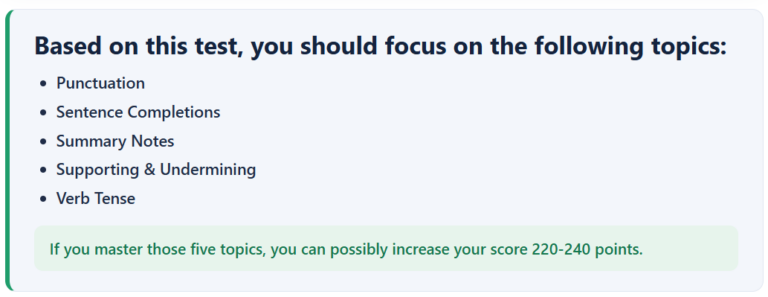
Want to Know What 5 Topics Will Improve Your SAT Score the Most?
Sample Feedback from our Diagnostic Test:
West Virginia University
West Virginia University is the state’s flagship public research university, in Morgantown, with 17,385 undergraduates. It reports the highest admitted scores on this page and admits 89% of applicants, and it operates one of the state’s two MD programs.
Admitted students scored 520 to 620 in Reading & Writing and 490 to 600 in Math, with the top quarter at or above 620 and 600. The reported ACT composite is 20 to 26. Cost of attendance is $26,415, with in-state tuition and fees of $10,104 against $28,608 for non-residents.
WVU is the only institution in the table whose Reading & Writing 25th percentile clears the PROMISE Scholarship section minimum, and the section below explains why that matters.
Marshall University
Marshall University is a public research university in Huntington with 7,266 undergraduates, and its Joan C. Edwards School of Medicine is the state’s second MD program. It admits 96% of applicants.
Cost of attendance is $22,022, with in-state tuition and fees of $9,162 against $20,342 for non-residents. Reported ranges are 480 to 590 in Reading & Writing and 430 to 560 in Math, and the ACT composite runs 19 to 24.
Marshall’s medical school publishes the most restrictive non-resident rule on this page, and it is covered later alongside WVU’s, because the two run in opposite directions.
West Virginia Wesleyan College
West Virginia Wesleyan College is a private liberal arts college in Buckhannon with 954 undergraduates, and it is the only private college in this table that reports admitted scores. It admits 93% of applicants and carries the guaranteed acceptance route to the state’s osteopathic medical school.
Admitted students scored 472 to 600 in Reading & Writing and 420 to 560 in Math. The reported ACT composite is 16 to 23, a seven-point spread. Cost of attendance is $48,190, the second highest in the state, with tuition and fees of $34,090.
Wesleyan reports the third-highest score midpoint on this page while costing more than twice what any public university here costs. That is the trade a West Virginia student weighs across the whole private sector.
Shepherd University
Shepherd University is a public university in Shepherdstown, in the state’s eastern panhandle, with 2,344 undergraduates. It admits 97% of applicants and carries the WVSOM guarantee.
Cost of attendance is $19,601, among the lowest on this page, with in-state tuition and fees of $9,056 against $19,082 for non-residents. Reported ranges are 468 to 600 in Reading & Writing and 410 to 540 in Math, with an ACT composite of 19 to 24.
Shepherd’s two reported score sets diverge more widely than any other institution’s in the state, and the concordance section explains what that normally indicates.
West Liberty University
West Liberty University is a public university near Wheeling with 1,511 undergraduates, and it is a WVSOM affiliate. It admits 97% of applicants.
Reported ranges are 470 to 580 in Reading & Writing and 420 to 543 in Math, with the top quarter at or above 580 and 543. The ACT composite is 18 to 24. Cost of attendance is $23,809, with in-state tuition and fees of $8,893 against $17,442 for non-residents.
West Virginia University Institute of Technology
West Virginia University Institute of Technology is a public university in Beckley with 981 undergraduates, operating under the WVU system, and it is a WVSOM affiliate. Its cost of attendance of $18,907 is the lowest on this page and its in-state tuition and fees of $8,424 are the lowest as well, against $21,072 for non-residents.
Admitted students scored 460 to 570 in Reading & Writing and 420 to 550 in Math, with an ACT composite of 19 to 23.
Its admit rate is the one figure on this page that two sources dispute, and the section on that conflict gives both numbers. The score ranges are not in dispute.
Bluefield State University
Bluefield State University is a public historically Black university in Bluefield with 1,042 undergraduates, and it is a WVSOM affiliate. It admits 97% of applicants.
Cost of attendance is $21,839. In-state tuition and fees are $10,648, the second highest of any public university here, against $18,376 for non-residents. Reported ranges are 440 to 540 in Reading & Writing and 430 to 540 in Math, with an ACT composite of 17 to 22.
Bluefield is one of four institutions where the top quarter of admitted students still falls short of the PROMISE Scholarship threshold.
Concord University
Concord University is a public university in Athens, in the southern part of the state, with 1,504 undergraduates. It admits 93% of applicants and is a WVSOM affiliate.
Concord charges the highest in-state tuition and fees of any public university on this page at $10,664, against $22,000 for non-residents, and its cost of attendance is $20,434. Admitted students scored 440 to 560 in Reading & Writing and 390 to 530 in Math, with an ACT composite of 17 to 24.
Fairmont State University
Fairmont State University is a public university in Fairmont with 2,590 undergraduates, and it admits 99% of applicants, the highest rate on this page. It is a WVSOM affiliate.
Cost of attendance is $20,018, with in-state tuition and fees of $8,708 against $18,924 for non-residents. Reported ranges are 450 to 560 in Reading & Writing and 360 to 510 in Math, and the ACT composite is 17 to 23.
Fairmont’s Math 75th percentile of 510 lands exactly on the PROMISE Scholarship’s Math minimum, so approximately a quarter of its admitted students who submitted scores reach that one threshold.
West Virginia State University
West Virginia State University is a public historically Black land-grant university in Institute, west of Charleston, with 1,321 undergraduates. It admits 96% of applicants and is a WVSOM affiliate.
Cost of attendance is $19,772. In-state tuition and fees are $9,570 against $14,990 for non-residents, and that $5,420 gap is the smallest of any public university on this page. Reported ranges are 410 to 550 in Reading & Writing and 350 to 490 in Math, with an ACT composite of 15 to 20.
West Virginia State is the one institution here whose admitted scores fall short of the PROMISE Scholarship thresholds on both routes, and the scholarship section works through what that means.
University of Charleston
The University of Charleston is a private university in Charleston, across the Kanawha River from the state capitol, with 2,259 undergraduates. It admits 62% of applicants, the second-lowest rate on this page, and it publishes no admitted score ranges.
Cost of attendance is $46,470, with tuition and fees of $33,800. Charleston is a WVSOM affiliate, so a student there can hold a guaranteed medical school acceptance without the college publishing a score range for him to aim at first.
Davis & Elkins College
Davis & Elkins College is a private liberal arts college in Elkins with 661 undergraduates. It admits 94% of applicants, publishes no admitted score ranges, and is a WVSOM affiliate.
Cost of attendance is $44,888, with tuition and fees of $31,820.
Bethany College
Bethany College is a private liberal arts college in Bethany, in the northern panhandle, with 614 undergraduates. It admits 59% of applicants, which makes it the most selective institution in the table on figures that are not in dispute, and it publishes no admitted score ranges.
Cost of attendance is $50,758, the highest in the state, with tuition and fees of $36,765. Bethany is a WVSOM affiliate.
A college that admits fewer than three applicants in five and publishes nothing about the students it admits is an awkward thing for a student to plan around, and Bethany is the clearest case of it here.
Wheeling University
Wheeling University is a private Catholic university in Wheeling with 589 undergraduates, the smallest institution on this page. It admits 63% of applicants and publishes no admitted score ranges.
Cost of attendance is $42,504, with tuition and fees of $29,875. Wheeling is the one private college in this table that is not a WVSOM affiliate.
What Score Does the PROMISE Scholarship Require?
The PROMISE Scholarship requires a core and cumulative grade point average of 3.0 or higher on a 4.0 scale together with a minimum score on either test. The SAT route asks for a total of 1080 with Evidence-Based Reading and Writing at 510 or higher and Math at 510 or higher. The ACT route asks for a composite of 21 with English, Math, Science and Reading each at 19 or higher. The award is up to $5,500 a year toward tuition and mandatory fees at eligible West Virginia institutions.
The deadlines are worth dating, because they are earlier than families expect. Applications close on 1 March 2026 and the 2026-27 FAFSA must be complete by the same date. The last qualifying SAT date is June 2026 and the last qualifying ACT date is July 2026, so a student who plans to test in August has already missed it.
Two other state programs matter to a reader comparing aid. The West Virginia Higher Education Grant is need-based, estimated at $3,400 for 2026-27, and asks for no test score. The WV Invests Grant is a last-dollar award covering tuition and approved fees, and it carries conditions worth naming plainly: an approved drug screening within 60 days before the first eligible term, two hours of community service each term an award is received, and residence in West Virginia for two years after enrollment ends, with repayment required if that is not met.
Why the 1080 Total Matters More Than the Section Minimums
The two SAT section minimums add up to 1020, which sits 60 points below the 1080 total the scholarship also requires. Both conditions have to hold, and which one binds depends on the shape of a student’s score rather than its size.
A student at 510 Reading & Writing and 510 Math meets both section minimums and still fails, because his total is 1020. A student at 570 and 510 qualifies on both counts. A student at 600 and 480 has exactly the same 1080 total as the second student and fails, because his Math score is below the section floor.
So the total is the binding condition for a balanced student and the section floor is the binding condition for a lopsided one. A student who is strong in one section and weak in the other cannot make up the difference by pushing his strong section higher.
The two routes are not equally forgiving, and nothing on the state’s own materials says so. The SAT route has two section floors. The ACT route has four, each at 19. An ACT student with a composite of 21 and an 18 in Science does not qualify, even though his composite clears the minimum. For a student with uneven sections, the ACT route is the harder of the two.
The Scholarship Is Harder to Get Than Admission
One correction applies to everything below, so it comes first. This table reports each section separately, and adding a 25th and a 75th percentile together overstates a real composite by approximately 20 points at each end, because no single student sits at the same percentile in both sections. Every comparison here carries that adjustment.
At all ten score-reporting institutions in West Virginia, the Math 25th percentile of admitted students sits below the scholarship’s Math minimum of 510. That includes West Virginia University, at 490.
At nine of the ten, the Reading & Writing 25th percentile is below 510 as well. WVU is the only institution that clears it, at 520.
In-article image 1 Shows: the ten score-reporting institutions as admitted Math ranges, with the PROMISE Math minimum of 510 drawn across all ten Alt text: West Virginia admitted Math score ranges with the PROMISE Scholarship minimum marked across them File name: promise-math-minimum-against-admitted-scores Size: 2760×1440
Drawn as a single line across the table, the line sits above the bottom quarter of every admitted class in the state.
At four institutions the corrected 75th-percentile total falls below 1080 entirely. Bluefield State reaches approximately 1060, Concord 1070, Fairmont State 1050 and West Virginia State 1020. At those four, fewer than one admitted student in four reaches the scholarship threshold.
West Virginia State falls short on both routes. Its Math 75th percentile of 490 is below the 510 Math floor, and its ACT 75th percentile of 20 is below the composite minimum of 21.
Set against the admit rates, that produces a plain result. Admission to West Virginia’s public universities runs from 89% at the flagship to 99% at Fairmont State. At every public university in the state, the merit scholarship is harder to clear than admission.
There is one practical reading, and it is the only place on this page where preparing for a test has an unambiguous financial return. A student sitting at or near the thresholds has $5,500 a year riding on a score most of his admitted classmates do not reach. That is a different calculation from preparing to get in, and it is worth separating from it.
Can You Get Guaranteed Admission to a West Virginia Medical School?
The West Virginia School of Osteopathic Medicine runs a Pre-Osteopathic Medicine Program that gives students at affiliate undergraduate colleges, in its own words, “an early, guaranteed acceptance to WVSOM” once they complete its requirements.
Entry asks for enrollment at an affiliate college, at least 30 credit hours completed with 12 of them in science, a science grade point average of 3.4 or higher, a recommendation from a science faculty member, and United States residency or permanent citizenship. Applications run from 1 January to 30 June, with interviews in July.
Keeping the guarantee asks for an AACOMAS application in senior year by 31 December, a maintained 3.4 science average, physician shadowing, volunteer or health care activity, two recommendations including one from an MD or DO who is not a relative, and all WVSOM prerequisite coursework.
The MCAT terms are the part worth reading twice. A science grade point average of 3.7 or higher waives the MCAT entirely. Between 3.4 and 3.69, an MCAT score of 498 or higher keeps the guarantee in place.
A West Virginia student with a 3.7 science average can therefore hold a guaranteed medical school seat without sitting the MCAT at all, and that is the most accessible published route into medicine on any page in this series. A 3.7 science average sustained across four years of pre-med coursework is a real bar, and it is a different kind of bar from a test score rather than a lower one.
Which Colleges Carry the Guarantee
WVSOM lists fourteen affiliate institutions, and twelve of them are in West Virginia. The two outside the state are Frostburg State University in Maryland and Waynesburg University in Pennsylvania.
Eleven of the fourteen colleges in the table above are affiliates. Those are Bethany, Bluefield State, Concord, Davis & Elkins, Fairmont State, Shepherd, the University of Charleston, West Liberty, West Virginia State, WVU Institute of Technology and West Virginia Wesleyan.
The twelfth West Virginia affiliate is Glenville State University, absent from the table only because it reports neither an admit rate nor admitted scores.
Three institutions in the table are not affiliates, and two of them have an obvious reason. West Virginia University and Marshall each operate their own MD school. Wheeling University is the third.
In-article image 2 Shows: the fourteen table institutions marked for whether they carry the guaranteed-acceptance route, with Glenville State added and WVU and Marshall marked as running their own MD schools Alt text: West Virginia colleges marked by whether they carry guaranteed early acceptance to the state osteopathic medical school File name: wvsom-guaranteed-acceptance-partner-colleges Size: 2760×1440
Read down the affiliate list, the two universities missing from the list are the two that run medical schools of their own.
This is where West Virginia separates itself from the rest of the series. Eight earlier states showed that where a student does his undergraduate degree affects his standing at a medical school, and in every one of them that had to be inferred from the composition of an entering class or read out of a stated preference order. West Virginia writes it into eligibility twice. WVSOM’s guarantee exists only for students enrolled at an affiliate college, and Marshall’s published criteria count current or past attendance at a West Virginia college as one of the state ties that qualify a non-resident for consideration at all.
So in West Virginia the choice of undergraduate college is a written admissions criterion rather than an observed pattern. That is the strongest form the finding has taken anywhere in this series, and it is the reason a West Virginia student should treat the affiliate list as part of his college decision rather than as something to look into later.
What Medical Schools Are in West Virginia?
West Virginia has three medical schools. Two award the MD and one awards the DO.
The West Virginia University School of Medicine in Morgantown received 6,104 applications for the class of 2030, conducted 548 interviews and enrolled 120 students. West Virginia residents make up 46% of that class and students from out of state 54%. The average MCAT score is 510 and the average science grade point average 3.77. WVU’s published class profile states no residency preference, and this page does not assert one.
The Marshall University Joan C. Edwards School of Medicine in Huntington publishes the most restrictive non-resident rule on this page, and the subsection below sets it out.
The West Virginia School of Osteopathic Medicine in Lewisburg, in Greenbrier County, awards the DO and is accredited by the Commission on Osteopathic College Accreditation and the Higher Learning Commission. Its class of 2030 has 210 first-year students, 79 of them West Virginia residents, which the school describes as the largest number of West Virginians in its history.
At 210 first-year students against WVU’s 120, the largest medical school in West Virginia is the osteopathic one. WVSOM’s own site describes annual enrollment of more than 800 students and calls itself the state’s largest medical school.
Two further claims on WVSOM’s site are the school’s own, and they are reported here as such. Citing a report from the West Virginia Higher Education Policy Commission, WVSOM says it ranks first in the state for producing physicians who practice in West Virginia, and that it has the lowest tuition of the state’s three medical schools. Neither is restated here as an established fact.
WVSOM also offers tuition waivers to in-state applicants meeting stated criteria, which the school’s announcement does not specify, and runs a Master of Science in Biomedical Sciences program from which 70% of West Virginia graduates entered the DO program in 2025 and 84% in 2026.
Two state programs are aimed directly at the reader of this page. The Medical Student Loan Program lends up to $10,000 a year to students at any of the three schools, gives West Virginia residents priority, and forgives up to $10,000 for each twelve consecutive months of full-time practice in a qualifying underserved area and specialty in the state. The Health Sciences Service Program pays $15,000 to $30,000 to a student in his final year against two years of full-time or four years of part-time service in an underserved West Virginia area.
The standard caution applies here with a West Virginia exception attached. Attending the undergraduate campus attached to a medical school helps with shadowing, research access and knowing the faculty, and it does not improve admission odds by itself. In West Virginia, though, both the affiliate list and Marshall’s criteria turn on where a student enrolled, so the undergraduate choice carries formal weight in this state that it does not carry elsewhere.
WVU and Marshall Point Opposite Ways
West Virginia’s two MD programs are both public, and their residency rules run in opposite directions.
WVU enrolls a majority of its class from outside West Virginia, at 54% for the class of 2030, and publishes no residency preference at all.
Marshall, as a state-assisted school, “gives preference to West Virginia residents” with no numeric quota, and makes a “limited number” of interviews available to qualified non-residents. Eligible non-residents are well-qualified applicants from five bordering states, Kentucky, Maryland, Ohio, Pennsylvania and Virginia, or applicants with strong West Virginia ties, which Marshall defines as prior residency in the state, current or past attendance at a West Virginia college, or close family living there. Applicants to the combined MD and PhD program are considered regardless of residency, and a minimum overall grade point average of 3.0 is preferred.
Then comes the sentence that closes the door. Marshall’s criteria state that “Other nonresidents are not considered.”
One public medical school in West Virginia admits a majority of its class from outside the state with no published preference. The other will not review an applicant from beyond five neighboring states unless he can point to a stated tie.
What follows for a student is that his position in West Virginia depends entirely on which of the two he is applying to. At Marshall the deciding question for an out-of-state applicant is whether he has a tie rather than how strong his file is, and a student without one is better served putting his effort into WVU.
Ten States, Ten Different Residency Rules
West Virginia is the first state in this series where two public medical schools in the same state run opposite rules, and that is what distinguishes it from the nine before.
Washington reserves approximately 95% of 280 seats for five states and admits out-of-region applicants at a three-year average of 0.5%. Texas caps non-residents at 10% of every public medical school class by statute. Utah publishes a 132-seat table reserving 90 for residents. North Carolina’s Brody School of Medicine bars applicants who are neither residents nor recent UNC System graduates. Tennessee’s UTHSC caps out-of-state admissions at approximately 10% as institutional policy. Oregon’s OHSU writes four criteria into a numbered policy. South Dakota’s Sanford grants residents an interview and reviews tied non-residents for one. North Dakota’s UND ranks a state degree inside a preference order. Vermont’s published policy governs tuition rather than admission.
Most of those states set one rule for the whole state. West Virginia has one school that applies no published residency test and another that applies a hard one, so a reader cannot ask what West Virginia’s rule is and get a single answer.
Every West Virginia Junior Takes the SAT at School
The West Virginia Department of Education uses the SAT as the state’s general summative assessment for high school, administered digitally to all grade 11 students, with an exception for students who take the West Virginia Alternate Summative Assessment.
Nearly every West Virginia junior therefore has an SAT score without arranging a weekend test, and that makes the SAT route the default path to the PROMISE Scholarship for almost every student in the state.
Two things the Department’s page does not state are worth asking a school counselor about rather than assuming. It does not say whether the test is free to students, and it does not say whether the requirement sits in statute or in board policy.
Virginia makes a useful comparison in both directions. House Bill 410 requires every Virginia school division to offer the SAT during the school day from 2026-27, so Virginia is arriving at an arrangement its neighbor already runs as a state assessment.
The reporting on this page shows the effect. All ten score-reporting institutions in West Virginia report SAT sums below their ACT equivalents once the 20-point summing correction is applied, with no exceptions in either direction. At the lower end the gaps run approximately 152 points at Shepherd, 150 at WVU Institute of Technology, 140 at Fairmont State, 120 at Marshall and Concord, 110 at West Virginia State, 100 at West Liberty, 80 at Bluefield State, 50 at WVU and 18 at West Virginia Wesleyan.
That is the pattern the Texas page described, where the small group who take the ACT in an state dominated by the SAT is self-selected and tests higher than the general applicant pool. Washington showed it at seven of nine institutions and Texas showed it unevenly. West Virginia shows it at ten of ten, and it is the only state in this series that administers the SAT to every junior itself, so the mechanism and the measurement agree.
One Admit Rate on This Page Is in Dispute
West Virginia University Institute of Technology’s admit rate is published as two different figures by two sources that both ought to know it. The College Scorecard reports 36.7%. The College Board reports 61.0%, from 1,005 applications and 613 admissions.
The gap changes what this page can claim. On the Scorecard figure, WVU Tech is the most selective institution in West Virginia by more than twenty points. On the College Board figure it sits in the middle of the table, between Wheeling at 63% and West Virginia University at 89%. This page therefore does not claim that WVU Tech is the most selective institution in the state, and the selectivity comparisons above are written off Bethany, the University of Charleston and Wheeling instead.
What the two sources do agree on narrows the problem usefully. The College Board gives WVU Tech an enrolled SAT range of 900 to 1120, and the Scorecard’s section figures sum to 880 to 1120. The conflict is confined to the admit rate.
The College Board page also records that WVU Tech considers SAT and ACT scores only if an applicant submits them. That is consistent with either admit rate and resolves neither.
Both numbers stay on this page and neither is reconciled here. A student weighing WVU Tech should ask its admissions office how many applicants it admitted last year, and should not plan around 37% or 61% until he has heard which one is right.
What If Your Scores Are Below the Range You Want?
A West Virginia student whose score sits below the range he wants is really asking two separate questions, and in this state they have different answers. A score barely affects whether he is admitted. A score decides whether he gets $5,500 a year.
Admission comes first, and the honest answer is that it rarely turns on the number. Nine of the fourteen institutions here admit more than 92% of applicants and West Virginia University admits 89%. For most of this table a score is one input among several rather than a gate. The only three institutions admitting fewer than two-thirds of applicants are Bethany at 59%, the University of Charleston at 62% and Wheeling at 63%, and none of the three publishes a range to aim at.
The money is the other question, and it is the reason this section exists. The PROMISE Scholarship asks for an SAT total of 1080 with neither section below 510, or an ACT composite of 21 with four sections at 19 or higher. That threshold sits above the bottom quarter of every admitted class in the state, and above the top quarter at Bluefield State, Concord, Fairmont State and West Virginia State.
So a student 40 or 60 points short of the threshold is not short of admission anywhere in the table. He is short of up to $5,500 a year, which across four years comes to as much as $22,000. At the public universities on this page, that is more than two years of resident tuition.
Our students since 2008 have normally needed approximately 40 hours of focused work to move a score meaningfully and approximately 80 hours for a larger jump. An ACT point is worth approximately 25 to 30 SAT points, so those hours convert between the tests.
A student weighing which test to prepare is better off on the SAT here, for two reasons that have nothing to do with which test suits him. The ACT route needs four section minimums rather than two, so an uneven score is likelier to clear the SAT thresholds. And he will already have sat the SAT at school in grade 11, so he has a real score to work from rather than an estimate.
The closing point for West Virginia runs opposite to the usual one. A test score here is worth preparing for because of what the state pays for it, not because of what it opens. Admission is available almost everywhere in this table regardless of the number, and the scholarship is not.
A student who wants to know where he stands before committing those hours should sit a full timed test first. Take a free diagnostic and work from a real score rather than an impression of one. Our guide on how to improve your SAT score sets out the method, and the conversion above makes it apply to the ACT.
Should a West Virginia Student Take the SAT or the ACT?
A West Virginia student should plan around the SAT, and the reasons here are stronger than in most states.
The state administers the SAT to every grade 11 student as its summative assessment, so a West Virginia student has an SAT score by default and has to go out of his way to get an ACT score at all.
The PROMISE Scholarship’s SAT route asks for two section minimums and its ACT route asks for four, so the SAT route is more forgiving of a student whose sections are uneven.
All ten score-reporting institutions on this page report both tests, so no college here wants the ACT and not the SAT. That is also why the table above carries no ACT column.
And the concordance pattern means a West Virginia student is measured against a broad pool on the SAT and against a small self-selected one on the ACT.
The case for adding the ACT is narrow. An application to a college in a state where the ACT dominates is the clearest one. The other is a student who sits timed practice tests of both and finds the formats genuinely suit him differently, which does happen, because the SAT’s adaptive sections and the ACT’s tighter timing reward different habits.
How to Read These Score Ranges
Every range on this page covers the middle 50% of admitted students who submitted that score. A quarter of admitted students scored below the lower figure, and the top quarter scored at or above the upper one.
Two things follow that students regularly get wrong. A score below the lower number does not rule a student out, because a quarter of the admitted class was there. And a score just above the lower number is weaker than it looks, because it sits at the bottom of the middle half rather than in the middle of it.
Three cautions apply to this page in particular.
Four of the fourteen institutions publish no ranges and all four are private, so the gap in this table sits in the private sector rather than the public one. That is the reverse of the Washington page, where the silent rows were almost all public universities.
A range describes the students a college admitted, not the students who qualified for state aid, and on this page those two groups are very different. A student should not read his way into a published range and assume he has landed inside the PROMISE thresholds, because at four institutions the whole published range sits below them.
And every range here describes students who chose to submit a score. Where a college is test-optional, students with stronger scores tend to submit them and students with weaker ones often do not, so a published range describes the submitters rather than a standard the college applied to everyone. That effect is weaker in West Virginia than in most states, because the state tests every junior rather than leaving students to decide whether to sit the test at all. Our guides on what SAT score you need for college and test-optional colleges cover what that means for a particular application.
Pre-Med Programs in Nearby States
West Virginia borders Ohio, Pennsylvania, Maryland, Virginia and Kentucky. That is five states, more than any other state written so far in this series.
Those borders are written into a medical school’s eligibility rule, so this is more than a geography note. Marshall’s eligible non-residents are applicants from Kentucky, Maryland, Ohio, Pennsylvania and Virginia, every state West Virginia touches. A student in any of those five can apply to a West Virginia public medical school on the strength of where he lives. A student in Indiana cannot, unless he has one of the West Virginia ties Marshall names.
The guaranteed-acceptance route crosses borders as well. WVSOM’s affiliate list includes Frostburg State University in Maryland and Waynesburg University in Pennsylvania, so the route is not strictly limited to West Virginia colleges.
Leaving West Virginia has a cost attached in the other direction. The PROMISE Scholarship does not travel, so a student who enrolls outside the state forfeits up to $5,500 a year, and the WV Invests Grant adds a two-year in-state residency condition that applies after enrollment ends.
Our pages for Pennsylvania and Virginia cover the colleges, costs and medical school rules in each.
Pre-Med Colleges in Other States
Every state page in this series follows the same format, with admitted score ranges, costs, admit rates and the state’s own medical school and scholarship rules. Our pre-med colleges by state index lists all of them.

Glyn Caddell
Glyn Caddell holds a BS in Mechanical Engineering from NJIT and has been tutoring New York City students since 2008. He founded Caddell Prep in 2012 and is the author of Digital SAT Math Secrets: Lessons & Tricks to Quickly Improve to a Perfect 800 on the Math Test, which contains over 900 practice problems and is used in Caddell Prep’s SAT math classes. He is founding president of the Staten Island Technical High School alumni association and teaches every lesson on this site personally.
Finally, an SAT course that students actually understand
Every question has a video explanation. Not most — every one.
The on-demand Digital SAT course covers all 17 math topics and 15 reading and writing topics, with 5 full-length practice tests and a 100-point score increase guarantee. Keep access for the rest of high school. No subscription.
Want to Know What 5 Topics Will Improve Your SAT Score the Most?
Sample Feedback from our Diagnostic Test: