
Home » College SAT Score Ranges, Costs, and Programs by Major and State » Best Pre-Med Colleges » Pre-Med Colleges in Virginia: SAT Scores, Costs, and Programs
By Glyn Caddell, BSME · Author of Digital SAT Math Secrets · Tutoring since 2008 — Updated October 17, 2026
Thirty Virginia colleges with pre-med programs, what they cost, and the SAT scores of the students they admit.
Virginia charges its own residents more at a public university than any other state does, and the grant program meant to help with tuition cannot be used at a public university at all.
Scores are given by section rather than as a single total, because a student at 650 Reading & Writing and 540 Math is in a different position from a student at 540 and 650.
Two abbreviations matter later on this page. MD is the degree awarded by most medical schools in the United States. DO is the degree awarded by colleges of osteopathic medicine, and DO holders are licensed physicians with the same practice rights. Virginia has four of the first and two of the second.
Table of Contents
- Virginia Pre-Med Colleges by SAT Score
- Virginia Charges Residents More Than Any Other State
- Virginia’s Tuition Grant Pays Nothing at a Public University
- Virginia’s HBCU Supplement Is Larger Than the Grant It Supplements
- Four Rows Where Virginia’s Published Numbers Do Not Hold Up
- Virginia Has Six Medical Schools and One Changed Hands
- Every Virginia Junior Now Gets an SAT at School
- What If Your Scores Are Below the Range You Want?
Virginia Pre-Med Colleges by SAT Score
The table below covers four-year public and non-profit institutions in Virginia awarding bachelor’s degrees or higher, with at least 1,000 undergraduates, that report an admit rate or admitted test scores. Thirty institutions meet that description.
Colleges are sorted by the midpoint of the two section ranges, with ties broken on the Math 75th percentile. The four colleges reporting no scores go last, ordered by size. There is no ACT column because no Virginia institution reports an ACT composite without also reporting SAT sections, so the column would add nothing the table does not already carry. Where an ACT range is worth knowing for a particular college, it appears in that college’s entry.
| College | Reading & Writing | Math | Cost of attendance | Undergraduates | Admit rate |
|---|---|---|---|---|---|
| Washington and Lee University | 710 to 760 | 720 to 780 | $87,000 | 1,881 | 14% |
| University of Virginia | 700 to 760 | 710 to 780 | $39,926 | 17,597 | 17% |
| University of Richmond | 700 to 750 | 710 to 780 | $80,961 | 2,980 | 22% |
| William & Mary | 710 to 760 | 690 to 770 | $43,035 | 7,055 | 34% |
| Virginia Tech | 640 to 710 | 640 to 740 | $36,951 | 30,923 | 55% |
| University of Mary Washington | 610 to 710 | 560 to 660 | $31,137 | 3,566 | 80% |
| George Mason University | 580 to 680 | 580 to 680 | $28,604 | 27,752 | 87% |
| James Madison University | 600 to 680 | 570 to 660 | $31,735 | 20,888 | 72% |
| Roanoke College | 560 to 660 | 530 to 640 | $54,283 | 1,767 | 83% |
| Old Dominion University | 570 to 650 | 530 to 630 | $29,446 | 17,514 | 90% |
| Bridgewater College | 550 to 680 | 470 to 680 | $58,702 | 1,400 | 92% |
| Christopher Newport University | 550 to 660 | 510 to 630 | $33,766 | 4,365 | 86% |
| Virginia Military Institute | 550 to 630 | 500 to 640 | $34,824 | 1,527 | 71% |
| Virginia Commonwealth University | 520 to 650 | 490 to 620 | $38,954 | 20,753 | 93% |
| Emory & Henry University | 548 to 640 | 503 to 583 | $52,854 | 1,078 | 84% |
| Regent University | 530 to 650 | 460 to 600 | $32,838 | 4,729 | 38% |
| Longwood University | 530 to 630 | 500 to 580 | $34,588 | 3,015 | 90% |
| University of Lynchburg | 520 to 620 | 460 to 610 | $50,067 | 1,577 | 43% |
| Randolph-Macon College | 500 to 630 | 480 to 590 | $63,985 | 1,639 | 87% |
| Radford University | 490 to 600 | 450 to 560 | $28,405 | 6,038 | 90% |
| Averett University | 448 to 583 | 478 to 560 | $53,460 | 1,231 | 57% |
| University of Virginia’s College at Wise | 520 to 580 | 425 to 540 | $26,593 | 1,101 | 29% |
| Virginia State University | 440 to 550 | 400 to 520 | $27,661 | 5,074 | 89% |
| Hampton University | 411 to 558 | 379 to 532 | $46,027 | 3,727 | 62% |
| Norfolk State University | 430 to 520 | 393 to 510 | $26,633 | 5,392 | 88% |
| Virginia Union University | 450 to 475 | 400 to 410 | $29,075 | 1,203 | 98% |
| Liberty University | Not reported | Not reported | $42,025 | 50,012 | 99% |
| Shenandoah University | Not reported | Not reported | $51,928 | 2,116 | 77% |
| Marymount University | Not reported | Not reported | $57,184 | 1,810 | 93% |
| Virginia Wesleyan University | Not reported | Not reported | $51,255 | 1,256 | 73% |
Each range covers the middle 50% of admitted students who submitted scores. A quarter scored below the lower number, and the top quarter scored at or above the upper one. Being under the lower number does not rule a student out, and being just above it is not as safe as it looks.
Five things in that table are worth stopping on.
William & Mary charges Virginia residents $25,914 in tuition and fees. No public university in the country charges students from its own state more. The University of Virginia and the Virginia Military Institute are also in the national top six. The next section works through the figures.
The University of Virginia’s College at Wise admits 29% of applicants, a lower share than William & Mary at 34%. A UVA branch campus of 1,101 undergraduates in far southwest Virginia is the fourth most selective institution in the state, and it also reports the lowest cost of attendance in this table at $26,593 and the lowest scores of any selective institution here.
Cost of attendance runs from $26,593 at Wise to $87,000 at Washington and Lee, a spread of better than three to one. Five private colleges cost more than $55,000 and five public universities cost less than $29,000.
Liberty University enrolls 50,012 undergraduates, more than 19,000 ahead of the next largest institution in this table, admits 99% of applicants and reports no admitted scores.
Four of these thirty are historically Black institutions, two private and two public. The difference between those two groups turns out to be worth up to $12,750 a year, and it has a section of its own below.
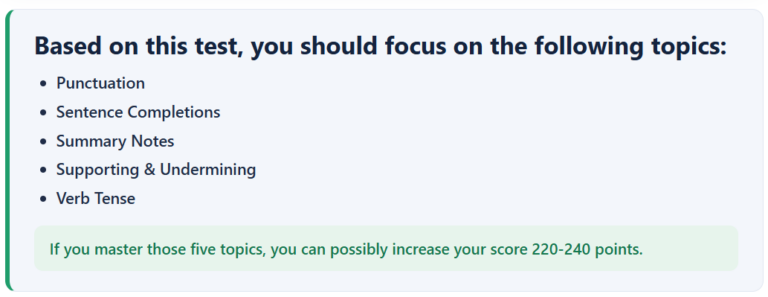
Want to Know What 5 Topics Will Improve Your SAT Score the Most?
Sample Feedback from our Diagnostic Test:
Washington and Lee University
Washington and Lee University is a private liberal arts university in Lexington with 1,881 undergraduates, and it admits 14% of applicants, the lowest rate in Virginia. Admitted students scored 710 to 760 in Reading & Writing and 720 to 780 in Math, so the top quarter were at or above 760 and 780, and tuition and fees are $68,045 against a total cost of attendance of $87,000, the highest on this page.
University of Virginia
The University of Virginia enrolls 17,597 undergraduates in Charlottesville and admits 17% of applicants. The admitted range runs 700 to 760 in Reading & Writing and 710 to 780 in Math, with the top quarter at or above 760 and 780, against an ACT range of 32 to 35. Residents pay $21,803 in tuition and fees and non-residents $59,512, a gap of $37,709 that is the second largest at any public university in the country, with a total cost of attendance of $39,926.
The UVA School of Medicine is on this campus, and it publishes more about who gets in than almost any medical school in this series.
University of Richmond
The University of Richmond is a private university with 2,980 undergraduates, and it reports the second highest cost of attendance in the state at $80,961. The middle half scored 700 to 750 in Reading & Writing and 710 to 780 in Math, putting the top quarter at or above 750 and 780, and Richmond charges $65,230 in tuition and fees while admitting 22% of applicants.
William & Mary
William & Mary enrolls 7,055 undergraduates in Williamsburg and admits 34% of applicants. Its admitted range is 710 to 760 in Reading & Writing and 690 to 770 in Math, and the top quarter sat at or above 760 and 770, with an ACT range of 32 to 34. Resident tuition and fees come to $25,914, the highest resident figure at any public university in the United States, and non-resident tuition to $51,038, against a total cost of $43,035.
Virginia Tech
Virginia Tech is the largest institution in this table after Liberty, with 30,923 undergraduates in Blacksburg, and it admits 55% of applicants. Admitted students scored 640 to 710 in Reading & Writing and 640 to 740 in Math, so the top quarter were at or above 710 and 740, against an ACT range of 28 to 32. In-state tuition and fees are $15,948 and out-of-state tuition is $37,764, with a total cost of attendance of $36,951.
The Virginia Tech Carilion School of Medicine operates in Roanoke, and a separate osteopathic college sits in Blacksburg under a collaborative agreement with the university.
University of Mary Washington
The University of Mary Washington is a public liberal arts university in Fredericksburg with 3,566 undergraduates and an 80% admit rate. The admitted range runs 610 to 710 in Reading & Writing and 560 to 660 in Math, with the top quarter at or above 710 and 660. Residents pay $14,640 in tuition and fees and non-residents $27,560, with a total cost of attendance of $31,137.
George Mason University
George Mason University enrolls 27,752 undergraduates in Fairfax and admits 87% of applicants. The middle half scored 580 to 680 in Reading & Writing and 580 to 680 in Math, putting the top quarter at or above 680 in both sections, against an ACT range of 25 to 30. In-state tuition and fees are $14,220 and out-of-state tuition is $38,688, against a total cost of attendance of $28,604.
James Madison University
James Madison University enrolls 20,888 undergraduates in Harrisonburg and admits 72% of applicants. Its admitted range is 600 to 680 in Reading & Writing and 570 to 660 in Math, and the top quarter sat at or above 680 and 660, with an ACT range of 24 to 29. Resident tuition and fees come to $14,250 and non-resident tuition to $31,604, with a total cost of attendance of $31,735.
Roanoke College
Roanoke College is a private liberal arts college in Salem with 1,767 undergraduates and an 83% admit rate. Admitted students scored 560 to 660 in Reading & Writing and 530 to 640 in Math, so the top quarter were at or above 660 and 640, and it charges $38,068 in tuition and fees against a total cost of attendance of $54,283.
Old Dominion University
Old Dominion University enrolls 17,514 undergraduates in Norfolk and admits 90% of applicants. The admitted range runs 570 to 650 in Reading & Writing and 530 to 630 in Math, with the top quarter at or above 650 and 630, against an ACT range of 24 to 29. Residents pay $12,750 in tuition and fees and non-residents $33,780, with a total cost of attendance of $29,446.
Old Dominion gained a medical school in July 2024, which it did not have two years ago, and the medical school section below explains how.
Bridgewater College
Bridgewater College is a private college in Bridgewater with 1,400 undergraduates and a 92% admit rate. The middle half scored 550 to 680 in Reading & Writing and 470 to 680 in Math, putting the top quarter at or above 680 in both sections, and it reports no ACT range.
The cost figures for Bridgewater need care. The Scorecard reports tuition of $16,090 against a total cost of attendance of $58,702, which would make Bridgewater the fourth most expensive institution in this table. The college’s own published figures for 2026-27 give tuition of $17,800, fees of $1,160, a residential fee of $15,830, total charges of $34,790 and a total budget including indirect costs of $40,188. The section on published numbers below works through which figure to trust.
Christopher Newport University
Christopher Newport University is a public liberal arts university in Newport News with 4,365 undergraduates, and it admits 86% of applicants. Its admitted range is 550 to 660 in Reading & Writing and 510 to 630 in Math, and the top quarter sat at or above 660 and 630, against an ACT range of 25 to 30. In-state tuition and fees are $16,828 and out-of-state tuition is $31,178, with a total cost of attendance of $33,766.
Virginia Military Institute
The Virginia Military Institute is Virginia’s state military college, in Lexington, with 1,527 undergraduates, and it admits 71% of applicants. Admitted students scored 550 to 630 in Reading & Writing and 500 to 640 in Math, so the top quarter were at or above 630 and 640, against an ACT range of 24 to 31. Residents pay $21,046 in tuition and fees, the sixth highest resident figure at any public university in the country, and non-residents $52,638, a gap of $31,592, with a total cost of attendance of $34,824.
Virginia Commonwealth University
Virginia Commonwealth University enrolls 20,753 undergraduates in Richmond and admits 93% of applicants. The admitted range runs 520 to 650 in Reading & Writing and 490 to 620 in Math, with the top quarter at or above 650 and 620, against an ACT range of 22 to 30. In-state tuition and fees are $16,945 and out-of-state tuition is $40,109, against a total cost of attendance of $38,954.
The VCU School of Medicine is on this campus, and it publishes the clearest numeric bar of any medical school in the state.
Emory & Henry University
Emory & Henry University is a private university in Emory with 1,078 undergraduates, the smallest institution in this table, and it admits 84% of applicants. The middle half scored 548 to 640 in Reading & Writing and 503 to 583 in Math, putting the top quarter at or above 640 and 583, and tuition and fees are $39,000 against a total cost of attendance of $52,854.
Regent University
Regent University is a private Christian university in Virginia Beach with 4,729 undergraduates, and it admits 38% of applicants, a lower share than William & Mary. Its admitted range is 530 to 650 in Reading & Writing and 460 to 600 in Math, and the top quarter sat at or above 650 and 600, with an ACT range of 19 to 26. Tuition and fees come to $21,650 against a total cost of attendance of $32,838.
Longwood University
Longwood University is a public university in Farmville with 3,015 undergraduates and a 90% admit rate. Admitted students scored 530 to 630 in Reading & Writing and 500 to 580 in Math, so the top quarter were at or above 630 and 580. Residents pay $15,744 in tuition and fees and non-residents $27,978, with a total cost of attendance of $34,588.
University of Lynchburg
The University of Lynchburg is a private university with 1,577 undergraduates, and it admits 43% of applicants. The admitted range runs 520 to 620 in Reading & Writing and 460 to 610 in Math, with the top quarter at or above 620 and 610, and it reports no ACT range. Tuition and fees are $36,750 against a total cost of attendance of $50,067.
Randolph-Macon College
Randolph-Macon College is a private liberal arts college in Ashland with 1,639 undergraduates and an 87% admit rate. The middle half scored 500 to 630 in Reading & Writing and 480 to 590 in Math, putting the top quarter at or above 630 and 590, against an ACT range of 21 to 27. It charges $49,466 in tuition and fees against a total cost of attendance of $63,985, the third highest in the state.
Radford University
Radford University enrolls 6,038 undergraduates in Radford and admits 90% of applicants. Its admitted range is 490 to 600 in Reading & Writing and 450 to 560 in Math, and the top quarter sat at or above 600 and 560, with an ACT range of 19 to 26. Resident tuition and fees come to $12,548 and non-resident tuition to $25,633, with a total cost of attendance of $28,405.
Averett University
Averett University is a private university in Danville with 1,231 undergraduates, and it admits 57% of applicants. Admitted students scored 448 to 583 in Reading & Writing and 478 to 560 in Math, so the top quarter were at or above 583 and 560, and tuition and fees are $38,550 against a total cost of attendance of $53,460.
Averett also reports an ACT range of 15 to 28, a thirteen-point spread that is the widest in the state by a clear margin. The section on published numbers below covers what to make of it.
University of Virginia's College at Wise
The University of Virginia’s College at Wise is a public liberal arts college in Wise, in far southwest Virginia, with 1,101 undergraduates, and it admits 29% of applicants, a lower share than William & Mary, Regent or Lynchburg. The middle half scored 520 to 580 in Reading & Writing and 425 to 540 in Math, putting the top quarter at or above 580 and 540, against an ACT range of 18 to 22. Residents pay $11,780 in tuition and fees and non-residents $28,010, with a total cost of attendance of $26,593, the lowest on this page.
A 29% admit rate alongside those score ranges is an unusual combination, and Wise does not publish an explanation for it. The likeliest reading is a small and largely local applicant pool rather than a high academic bar, and a student considering Wise should ask the admissions office what its pool actually looks like rather than reading the admit rate as a difficulty signal.
Virginia State University
Virginia State University is a public historically Black university in Petersburg with 5,074 undergraduates, and it admits 89% of applicants. Its admitted range is 440 to 550 in Reading & Writing and 400 to 520 in Math, and the top quarter sat at or above 550 and 520, with an ACT range of 14 to 20. In-state tuition and fees are $10,043, the lowest resident figure in the state, and out-of-state tuition is $22,650, against a total cost of attendance of $27,661.
Hampton University
Hampton University is a private historically Black university in Hampton with 3,727 undergraduates, and it admits 62% of applicants. It charges $30,592 in tuition and fees against a total cost of attendance of $46,027, and it is one of two institutions in this table where a Virginia resident qualifies for both the state tuition grant and its HBCU supplement.
Hampton’s reported ranges are 411 to 558 in Reading & Writing, 379 to 532 in Math and 13 to 22 on the ACT. Those are unusually wide and unusually low for an institution admitting 62% of applicants, and the section on published numbers below sets out why this page does not draw a conclusion from them.
Norfolk State University
Norfolk State University is a public historically Black university in Norfolk with 5,392 undergraduates and an 88% admit rate. Admitted students scored 430 to 520 in Reading & Writing and 393 to 510 in Math, so the top quarter were at or above 520 and 510, against an ACT range of 16 to 22. Residents pay $10,180 in tuition and fees and non-residents $21,682, with a total cost of attendance of $26,633.
Norfolk State is also the proposed partner in a joint school of public health with Old Dominion, covered in the medical school section below.
Virginia Union University
Virginia Union University is a private historically Black university in Richmond with 1,203 undergraduates, and it admits 98% of applicants. Tuition and fees are $17,450 against a total cost of attendance of $29,075, and a Virginia resident here qualifies for the state tuition grant and its HBCU supplement.
Virginia Union reports a Reading & Writing range of 450 to 475 and a Math range of 400 to 410. A ten-point middle-half range cannot describe an admitted class, and the section below explains how this page handles it.
Liberty University
Liberty University is a private Christian university in Lynchburg with 50,012 undergraduates, far more than any other institution in this table, and it admits 99% of applicants. It reports no admitted test scores. Tuition and fees are $22,465 against a total cost of attendance of $42,025.
The Liberty University College of Osteopathic Medicine is on this campus.
Shenandoah University
Shenandoah University is a private university in Winchester with 2,116 undergraduates, and it reports no admitted test scores. Tuition and fees come to $36,950 against a total cost of attendance of $51,928, and Shenandoah admits 77% of applicants.
Marymount University
Marymount University is a private Catholic university in Arlington with 1,810 undergraduates, and it reports no admitted test scores. It charges $40,920 in tuition and fees against a total cost of attendance of $57,184, and admits 93% of applicants.
Virginia Wesleyan University
Virginia Wesleyan University is a private university in Virginia Beach with 1,256 undergraduates, and it reports no admitted test scores. Tuition and fees are $37,500 against a total cost of attendance of $51,255, and the university admits 73% of applicants.
Virginia Charges Residents More Than Any Other State
William & Mary charges Virginia residents $25,914 in tuition and fees, and no public university in the United States charges students from its own state more than that.
That figure was computed across every public university in the national dataset enrolling at least 1,000 undergraduates, and saying so matters because a reader has good reason to be skeptical of a superlative in an article like this one. Temple follows at $23,011, the University of Pittsburgh at $21,926 and the Colorado School of Mines at $21,914, then the University of Virginia at $21,803 and the Virginia Military Institute at $21,046.
Three of the six highest resident tuitions in the country are Virginia institutions.
Resident tuition and fees at the most expensive public universities in the country. Three of the six most expensive public universities for residents are in one state.
The non-resident side is just as pronounced. The University of Virginia charges non-residents $59,512 against $21,803 for residents, a gap of $37,709 that is the second largest at any public university in the country, behind only the University of Michigan at Ann Arbor at $43,210. VMI follows at $31,592, William & Mary at $25,124, George Mason at $24,468 and VCU at $23,164.
None of which describes the whole state. Virginia State charges residents $10,043 and Norfolk State $10,180, so the state’s own public universities run from approximately $10,000 to nearly $26,000 for a student with identical residency. A Virginia family comparing two public options is looking at a two-and-a-half-fold difference in tuition before any aid is applied.
Virginia's Tuition Grant Pays Nothing at a Public University
The Virginia Tuition Assistance Grant is available only at eligible private non-profit colleges and universities in Virginia. A Virginia resident attending William & Mary, the University of Virginia or the Virginia Military Institute receives nothing from it.
What the grant asks for is a short list. A student must qualify as a Virginia student through domicile, military dependent status or the Tuition Equity Provision, and must enroll full time at an eligible private non-profit Virginia institution, subject to a waiver under the Americans with Disabilities Act. There is no financial need test, no FAFSA requirement, no grade point requirement, no test score requirement and no repayment. The grant is not for religious training or theological education, and programs in one federal classification group are excluded.
The Tuition Equity Provision is the route for students without domiciliary residency. It requires two years at a Virginia high school, completion of high school in Virginia on or after 1 July 2008, Virginia state income tax filings for the two prior years, and a separate application.
The amounts for 2026-27 are $5,250 for undergraduates, with a 15 September application deadline, and $5,000 for graduate students in eligible health professional programs. Students in online or distance programs receive half the standard award. The base award is set each year by appropriation and varies with the number of eligible students, so the figure a student sees quoted somewhere else may belong to a different year.
What a Virginia resident receives, by where they enroll. The grant pays nothing at the university that charges residents the most.
Set that against the section above and the arrangement is plain enough. The state with the highest public resident tuition in the country runs a tuition grant that its public university students cannot use.
It is also the only program of its kind in this series. Tennessee’s HOPE Scholarship, the Texas Grant, South Dakota’s Opportunity Scholarship and Utah’s Opportunity Scholarship all fund attendance at in-state institutions, public ones included. Vermont’s grant is portable and follows a student across the state line. Virginia’s is the only one restricted by sector rather than by geography.
And It Reaches Medical School
The Commonwealth’s budget documentation lists the health professional graduate programs eligible for the grant, and the list includes medicine and osteopathic medicine alongside allied health, nursing and pharmacy.
A Virginia resident enrolled in an MD or DO program at an eligible private Virginia institution therefore receives $5,000 a year. The Edward Via College of Osteopathic Medicine publishes its own page on the grant and states that the award renews automatically for up to four years, which matches the length of a DO program.
This is the second state in a row where state grant aid reaches medical school. Vermont’s grant carries a specific exception for students in the University of Vermont’s MD program. Virginia funds health professional graduate study at private institutions as a standing category rather than as an exception to a rule.
Confirm the current amount with the school or with the State Council of Higher Education for Virginia before relying on a figure, because the award moves with the annual appropriation.
Virginia's HBCU Supplement Is Larger Than the Grant It Supplements
Virginia’s HBCU supplement adds up to $7,500 a year on top of the base award, and it goes to undergraduate and graduate students at grant-eligible private non-profit Virginia historically Black colleges and universities accredited by SACSCOC.
That takes an undergraduate from $5,250 to up to $12,750, and it means the supplement is larger than the award it is added to. A parallel supplement of up to $2,000 a year applies at non-profit private Hispanic-serving institutions, beginning in 2025-26.
The part that matters more than the headline figure is which institutions it reaches. Virginia has four historically Black institutions in the table above, and the supplement reaches two of them. Hampton University and Virginia Union University are private, so both the grant and the supplement apply. Norfolk State University and Virginia State University are public, so neither does.
Working that through is the single most useful calculation on this page for a Virginia student weighing those options.
Hampton charges $30,592 in tuition and fees. Subtract up to $12,750 and approximately $17,842 remains. Norfolk State charges Virginia residents $10,180 in tuition and fees and receives no grant at all. So Norfolk State remains the cheaper tuition, but a gap of $20,412 narrows to approximately $7,662.
Tuition and fees before and after the grant and its supplement. The supplement closes most of the gap but not all of it.
Two cautions belong with that arithmetic. Both figures above are tuition and fees rather than total cost of attendance, and the cost-of-attendance column in the table tells a different story, with Hampton at $46,027 and Norfolk State at $26,633. And the $7,500 is a ceiling rather than a guaranteed amount. A student should redo this calculation with his own aid letters in front of him rather than treating it as a conclusion.
Four Rows Where Virginia's Published Numbers Do Not Hold Up
Four institutions in the table above publish figures that cannot be taken at face value, and each needs a different kind of caution.
Bridgewater College is the most consequential. The Scorecard reports a cost of attendance of $58,702 with tuition of $16,090, which places Bridgewater fourth most expensive in this table. Bridgewater’s own figures for 2026-27 give tuition of $17,800, fees of $1,160, a residential fee of $15,830, total charges of $34,790 and a total budget including indirect costs of $40,188. The tuition figure is broadly right, because Bridgewater genuinely charges low tuition for a private college. It is the cost-of-attendance figure that looks overstated, by approximately $18,500 against the college’s own total budget. Correcting it moves Bridgewater from one of the most expensive institutions on this page to one of the least expensive privates. That is a large enough swing to change a shortlist.
Virginia Union University reports a Reading & Writing range of 450 to 475 and a Math range of 400 to 410. A ten-point middle-half Math range is the narrowest figure this series has encountered in any state, and it cannot describe the middle half of an admitted class. The narrow ranges at the top of this page are a different situation. Washington and Lee, Richmond and William & Mary all report 50-point ranges because their admitted students are bunched near the top of the scale, and that is a ceiling effect rather than a reporting problem.
Averett University reports an ACT range of 15 to 28. A thirteen-point middle-half spread describes almost no coherent group, and the next widest in the state are VCU at 22 to 30 and Regent at 19 to 26, at eight and seven points.
Hampton University reports an ACT range of 13 to 22 alongside SAT sections of 411 to 558 and 379 to 532. Those figures are both wide and low for an institution admitting 62% of applicants, and they sit oddly against everything else known about the university. This page reports them, notes that they are unusual, and draws no conclusion about Hampton from them, because a conclusion drawn from a figure that looks wrong is worse than no conclusion at all.
In all four cases both figures stay on the page, neither is reconciled and neither is quietly dropped. A student considering any of these four should ask that admissions or financial aid office which number describes the class or the cost he would actually face.
Virginia Has Six Medical Schools and One Changed Hands
The University of Virginia School of Medicine publishes its applicant funnel by residency, which almost no medical school in this series does, and the numbers answer a question most schools leave open.
For the class entering in 2026, UVA received 7,248 applications, of which 1,056 came from Virginia residents and 6,192 from out of state. It interviewed 627 applicants, of whom 149 were Virginians and 478 were not. The entering class of 155 students is 54% Virginian and 46% out of state. The mean MCAT score is 520 and the mean grade point average is 3.91.
Read those three stages in order and the shape is clear. Virginia residents were approximately 15% of the applicant pool, approximately 24% of the interviewees, and 54% of the class.
UVA does not describe a residency preference anywhere in its admissions materials, and this page is not asserting one. What it is saying is narrower and better evidenced: the school publishes figures from which a Virginia resident can see that residents make up a far larger share of the class than of the applications, and a student who wants to know why should ask the admissions office rather than infer it.
VCU publishes a different kind of information and it is useful in a different way. Its MD program states a minimum MCAT score of 503 against an average of 513, and a minimum undergraduate science grade point average of 3.3 against an average of 3.7. The MCAT must be taken no later than September of the application year. Required coursework runs to a year each of biology with lab, general chemistry with lab, physics with lab, English writing-intensive courses and college algebra or higher, plus a semester of biochemistry and one or two semesters of organic chemistry with lab depending on the student’s program. VCU’s published materials do not describe a residency preference or quota.
The standard caution applies at all six schools. A medical school on campus gives an undergraduate better access to shadowing, research positions and people who read applications for a living. It does not improve his odds of admission there, because applications are read against a national pool.
Every Virginia Junior Now Gets an SAT at School
Virginia now requires every school division to offer the SAT during the school day, and the requirement is new enough that most published advice has not caught up with it.
House Bill 410, signed on 8 April 2026 and effective 1 July 2026, requires all school boards to participate in SAT School Day. Juniors take the test at their own schools during the school day, in a fall or spring testing window, and the requirement applies from the 2026-27 school year. The Virginia Department of Education has been running webinars and office hours with the College Board to help divisions implement it.
One important detail is unresolved in the Commonwealth’s published material. Neither the Department of Education bulletin nor the College Board announcement states whether the test is free to students or who covers the cost, so this page does not say that it is free. A student or parent who needs to know should ask the school division directly. The sources also differ on whether the requirement covers juniors alone or juniors and seniors, and that is worth confirming locally for the same reason.
What Virginia does not do is use either college entrance exam in its graduation requirements. The state’s assessment program is the Standards of Learning, graduation runs on standard and verified credits, and neither the SAT nor the ACT appears in the Standard Diploma requirements. The only reference to college entrance requirements in the graduation regulation is a note that a school counselor must tell students and parents about possible effects if a student substitutes computer science for a world language toward an Advanced Studies Diploma.
Virginia is now the fourth state in this series to put a college entrance exam in front of students at school, and it has chosen differently from the other three. Utah and South Dakota each provide a free ACT to every junior. Tennessee pays for two ACT attempts, a junior test and a funded senior retake. Virginia requires districts to offer the SAT, the test every scoring institution on this page reports.
What If Your Scores Are Below the Range You Want?
A Virginia student whose score sits below the range he wants should first work out which part of this page his question belongs to, because the answer differs sharply across it.
Seven institutions here admit fewer than half their applicants and twenty admit more than seven in ten, with four publishing no ranges at all. For most of this table a score is one input among several rather than a gate.
Five places on this page do turn on the number, and the table gives the distances.
Washington and Lee at 14% reports an admitted range of 710 to 760 in Reading & Writing and 720 to 780 in Math. The University of Virginia at 17% reports 700 to 760 and 710 to 780. Richmond at 22% reports 700 to 750 and 710 to 780. William & Mary at 34% reports 710 to 760 and 690 to 770. Those four are a different exercise from everything below them.
Virginia Tech at 55% is the one that matters to the largest number of Virginia students, with an admitted range of 640 to 710 and 640 to 740. It is the realistic reach where the four above are not.
Something the score does not do in Virginia is worth saying plainly. It has no effect on the Tuition Assistance Grant, which asks for no grades and no test scores at all. That is the opposite of Tennessee and South Dakota, where the score was the scholarship, and it means a Virginia student cannot improve his state aid by testing better.
Our students since 2008 have normally needed approximately 40 hours of focused work to move a score meaningfully and approximately 80 hours for a larger jump. An ACT point is worth approximately 25 to 30 SAT points, so those hours convert between the tests.
The honest close for Virginia is about which column of a cost comparison opens rather than about a scholarship. With the highest public resident tuition in the country and a grant that only works privately, a Virginia family has an unusually complicated comparison to make, and a strong score mostly affects which selective private colleges are available, where the grant applies and where institutional aid is largest. It does not change what William & Mary charges.
A student who wants to know where he stands before committing those hours should sit a full timed test first. Take a free diagnostic and work from a real score rather than an impression of one. Our guide on how to improve your SAT score sets out the method, and the conversion above makes it apply to the ACT.
Should a Virginia Student Take the SAT or the ACT?
A Virginia student should normally plan around the SAT, and the state has just made that easier.
Every school division is required to offer the SAT during the school day from 2026-27, so most Virginia juniors will have an SAT score without arranging a weekend test. Twenty-six of the institutions in the table above report SAT sections and twenty-three report an ACT composite, and the twenty-three are a subset of the twenty-six. Bridgewater, Lynchburg and Virginia Union report the SAT alone, and no Virginia institution reports the ACT without the SAT.
The reasons to add the ACT are narrow. An application to a college in a state where the ACT dominates is the clearest. A student who sits timed practice tests of both and finds the formats genuinely suit him differently is the other, which does happen because the SAT’s adaptive sections and the ACT’s tighter timing reward different habits.
How to Read These Score Ranges
Every range on this page covers the middle 50% of admitted students who submitted that score. A quarter of admitted students scored below the lower figure, and the top quarter scored at or above the upper one.
Two things follow that students regularly get wrong. A score below the lower number does not rule a student out, because a quarter of the admitted class was there. And a score just above the lower number is weaker than it looks, because it sits at the bottom of the middle half rather than in the middle of it.
Four cautions apply to this page in particular.
Four institutions publish no ranges, so for Liberty, Shenandoah, Marymount and Virginia Wesleyan there is no published figure of any kind to compare against.
Four further rows publish figures that need caution, and the section above covers Bridgewater’s cost of attendance, Virginia Union’s ten-point Math range and the wide ACT ranges at Averett and Hampton.
The narrow ranges at the top of the table are a different matter from Virginia Union’s. Washington and Lee, Richmond and William & Mary report 50-point ranges because their admitted students sit near the top of the scale, not because the data is thin.
And every range here describes students who chose to submit a score. Where a college is test-optional, students with stronger scores tend to submit them and students with weaker ones often do not, so a published range describes the submitters rather than a standard the college applied to everyone. Our guides on what SAT score you need for college and test-optional colleges cover what that means for a particular application.
Pre-Med Programs in Nearby States
Virginia borders Maryland, West Virginia, Kentucky, Tennessee and North Carolina, and the District of Columbia.
Leaving Virginia has a specific cost. The Tuition Assistance Grant does not travel, so a student who enrolls outside the Commonwealth forfeits up to $5,250, or up to $12,750 if he would have attended a private Virginia HBCU.
The border runs the other way too, and for one corner of the state it runs usefully. Tennessee’s Quillen College of Medicine treats applicants from specific Virginia border counties as Tennesseans for admissions and tuition purposes under stated fee-waiver conditions. That is the same part of far southwest Virginia where the University of Virginia’s College at Wise sits, so for a student there a Tennessee medical school may be closer in practice than its address suggests.
Our pages for Tennessee and North Carolina cover the colleges, costs and medical school rules in each.
Pre-Med Colleges in Other States
Every state page in this series follows the same format, with admitted score ranges, costs, admit rates and the state’s own medical school and scholarship rules. Our pre-med colleges by state index lists all of them.

Glyn Caddell
Glyn Caddell holds a BS in Mechanical Engineering from NJIT and has been tutoring New York City students since 2008. He founded Caddell Prep in 2012 and is the author of Digital SAT Math Secrets: Lessons & Tricks to Quickly Improve to a Perfect 800 on the Math Test, which contains over 900 practice problems and is used in Caddell Prep’s SAT math classes. He is founding president of the Staten Island Technical High School alumni association and teaches every lesson on this site personally.
Finally, an SAT course that students actually understand
Every question has a video explanation. Not most — every one.
The on-demand Digital SAT course covers all 17 math topics and 15 reading and writing topics, with 5 full-length practice tests and a 100-point score increase guarantee. Keep access for the rest of high school. No subscription.
Want to Know What 5 Topics Will Improve Your SAT Score the Most?
Sample Feedback from our Diagnostic Test: