
Home » The Digital SAT: What’s Tested, How It’s Scored, and How to Improve Your Score » About the SAT: What It Is, Who Runs It, Who Takes It, and What It Costs
By Glyn Caddell, BSME · Author of Digital SAT Math Secrets · Tutoring since 2008 — Updated August 30, 2026
The SAT is a college admissions test published by the College Board and scored on a scale of 400 to 1600. It’s taken on a computer at a test center through an app called Bluebook, and registration costs $68 in the United States for the 2026–27 testing year. This page covers what the SAT is, who takes it, when it’s given, what it costs, and how it has changed.
Table of Contents
What Is the SAT?
The SAT is a standardized test used for college admissions. It measures reading, writing, and math skills that students learn in high school, and it’s scored from 400 to 1600, with each of the two sections scored from 200 to 800.
Colleges use SAT scores alongside grades, activities, essays, and recommendations. Scores are also used for merit scholarships and for placement into certain college programs.
Whether a college requires the SAT depends on the college. Many require it, many are test-optional, and the number requiring it has been rising since 2024. Even at test-optional schools, a strong score can help an application.
Who Publishes the SAT?
The SAT is owned, developed, and published by the College Board, a nonprofit organization that also runs the PSAT and the AP program.
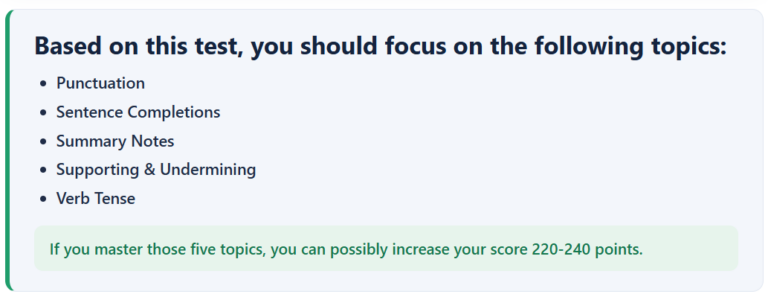
Want to Know What 5 Topics Will Improve Your SAT Score the Most?
Sample Feedback from our Diagnostic Test:
Who Takes the SAT?
Most students who take the SAT are in 11th or 12th grade, normally between ages 16 and 18. Most take it for the first time in the spring of junior year.
Students take the SAT because they plan to apply to colleges that accept or require scores. Some take it more than once to improve.
Demographics of SAT Test Takers
Students who take the SAT attend public schools, private schools, and home schools, and come from every state. See more on the demographics of SAT test takers.
International Students and the SAT
Students outside the United States can take the SAT if they plan to apply to American colleges. International registration costs more than domestic registration. See more about the international SAT.
When Is the SAT Given?
The SAT is given several times each year. The typical test months are March, May, June, August, October, November, and December.
Not every location offers the SAT on every date, so students should check what’s available in their area. Some test centers fill up quickly. Registering early improves a student’s chances of getting his preferred date and location. See the current SAT test dates and registration deadlines.
How Do Students Register for the SAT?
Students register online through a College Board account. Registration requires a full legal name, date of birth, mailing address, and a photo that will be used for identification on test day.
Payment is made during registration. Students can save their progress and come back to finish later. Double-check every field before submitting, because errors can cause problems at the test center.
Registering by mail is possible, but we recommend registering online. Here are the full steps to register for the SAT.
How Much Does the SAT Cost?
The SAT registration fee is $68 in the United States for the 2026–27 testing year. That fee includes sending scores to up to four colleges.
There are additional charges for registering late, changing a test date or test center, and sending score reports beyond the first four. International students pay the base fee plus a regional fee. Fees change from year to year, so check the College Board’s fee page before registering.
SAT Fee Waivers
Students from low-income families can qualify for a fee waiver, which covers registration for up to two test dates. Fee waivers also include additional score reports and, at participating schools, college application fee waivers.
Eligibility is normally tied to household income or to qualifying for free or reduced-price lunch. Students should talk to their school counselor to find out if they qualify and how to apply.
SAT Testing Accommodations
Students with documented disabilities can request testing accommodations, such as extended time, extra breaks, or a separate testing room.
Requests go through the school, and they take time to process, so students should start the request well before the test date they’re aiming for.
How Has the SAT Changed?
The SAT started in 1926 as a way to give more students a chance at college, not just students from certain schools. The purpose of the SAT is to give colleges a standard, objective way to compare students from different schools and different states.
The format has changed many times since then. Earlier versions had separate verbal and math sections. An optional essay was added and later removed. The scoring scale has changed more than once.
The biggest recent change came in 2024, when the test moved from paper to digital.
The Digital SAT Compared With the Paper SAT
| Old SAT (paper) | Digital SAT |
|---|---|
| About 3 hours | 134 minutes plus a 10-minute break |
| Fixed questions for every student | Adaptive from module to module |
| Calculator banned on part of math | Calculator allowed on all math |
| Long passages with several questions each | Short passages with one question each |
| Answers bubbled on paper | Answers selected or typed on screen |
There are fewer questions on the Digital SAT, so each one counts for more. The Reading and Writing sections were merged into one section. The math section still covers Algebra, Advanced Math, Problem-Solving and Data Analysis, and Geometry and Trigonometry.
A graphing calculator is built into the Bluebook app and is available throughout the math section. The app also includes a timer and a way to flag questions to come back to.
One thing to note: there are no grid-in answer sheets on the Digital SAT. Some math questions ask students to produce their own answer, but they type it in rather than bubbling it on a grid.
Previous Versions of the SAT
Students studying with older books may be preparing for a test that no longer exists. See what changed in the previous versions of the SAT.
What Should Students Know Before Taking the SAT?
Knowing what the SAT is and how to sign up for it is separate from knowing what’s on it and how to do well on it. This section covers the rest briefly and points to where each topic is covered in full.
What Is Tested on the Digital SAT?
There are 32 specific topics on the Digital SAT: 17 in math and 15 in Reading & Writing. Some appear far more often than others.
All Reading & Writing questions are multiple choice. Most math questions are multiple choice, and the rest ask students to type in an answer.
See the full breakdown of the 17 Digital SAT math topics and the 15 Digital SAT Reading & Writing topics, including how often each one is tested.
How the SAT Is Scored
The SAT is scored from 400 to 1600, and it’s adaptive from module to module. A student’s performance on the first module of each section determines the difficulty of the second module, and the second module sets the score ceiling.
See more on how SAT scoring works, including what counts as a good score.
Finally, an SAT course that students actually understand
Every question has a video explanation. Not most — every one.
The on-demand Digital SAT course covers all 17 math topics and 15 reading and writing topics, with 5 full-length practice tests and a 100-point score increase guarantee. Keep access for the rest of high school. No subscription.
SAT vs ACT
Colleges accept both the SAT and the ACT, and both are used for scholarships.
The ACT changed its format in 2025. The core ACT is now three required sections — English, Math, and Reading — taking about 2 hours and 5 minutes. Science became optional. Students who take Science get a separate score that isn’t part of the composite, and it adds about 40 minutes.
| Feature | SAT | ACT |
|---|---|---|
| Required sections | Reading & Writing, Math | English, Math, Reading |
| Optional sections | None | Science, Writing |
| Core testing time | 134 minutes | 125 minutes |
| Format | Digital only | Digital or paper |
| Adaptive | Yes, module to module | No |
| Score scale | 400–1600 | 1–36 |
The two tests reward different things, so the best way to decide is to take a practice test of each and compare. More on choosing between the SAT and the ACT.
How Colleges Use SAT Scores
Colleges use SAT scores to compare students from different high schools on the same scale. Some programs use score cutoffs. Many schools use scores for merit scholarships.
Many colleges went test-optional in 2020 during the pandemic. Since 2024, a number have reversed that. Dartmouth was the first Ivy League school to reinstate the requirement, announcing it on February 5, 2024, and others followed.
See more on what SAT score you need for college and which schools are test-optional.
How Many Times Can Students Take the SAT?
There’s no limit. Most students take the SAT twice, normally once in the spring of junior year and again in the fall of senior year.
For almost all applications, students choose which scores to send, so colleges only see the test dates a student shares. Some colleges superscore, which means they combine the highest section scores across different test dates. A few schools ask for every score, so check each college’s policy before registering again.
More on SAT superscoring and on improving your SAT score between attempts.
Common SAT Myths
Myth: The SAT is a test of intelligence. The SAT measures specific skills in reading, writing, and math. It doesn’t measure intelligence or predict what a student will do in college.
Myth: Every student has an equal shot. The test is written to be fair, but students don’t have equal access to preparation, practice materials, or time to study.
Myth: Expensive test prep is required. It isn’t. The College Board and Khan Academy both publish free practice materials, and a student who uses them consistently can improve. Paid prep buys structure, expert instruction, and accountability, which is worth it for some students and not for others.
Myth: SAT scores alone decide admission. Colleges look at grades, activities, essays, and recommendations too. At most schools the SAT is one factor among several.
Myth: The SAT asks very hard math questions. Most math questions cover concepts taught in high school. What makes them difficult is the wording and the time limit, not the math itself.
How to Prepare for the SAT
Preparing for the SAT starts with finding out which of the 32 topics are costing you points. Studying everything evenly takes far longer than studying the topics you’re actually missing.
Our free diagnostic SAT gives students an accurate score based on College Board scoring, plus an assessment showing which topics to study first. From there, students can work through the topics on their own, in a class, or with a tutor. See all SAT prep options to compare them.

Glyn Caddell
Glyn Caddell holds a BS in Mechanical Engineering from NJIT and has been tutoring New York City students since 2008. He founded Caddell Prep in 2012 and is the author of Digital SAT Math Secrets: Lessons & Tricks to Quickly Improve to a Perfect 800 on the Math Test, which contains over 900 practice problems and is used in Caddell Prep’s SAT math classes. He is founding president of the Staten Island Technical High School alumni association and teaches every lesson on this site personally.
Need Help Preparing for the SAT?
Use the only SAT prep course built with an engineer’s approach and taught in a way that students actually understand.
100-point score increase guarantee
Take a Free Diagnostic SAT
Discover the 5 Topics That Could Make the Biggest Difference in Your Score.
Take our free diagnostic and receive a personalized assessment showing exactly what to study next.