
Home » College SAT Score Ranges, Costs, and Programs by Major and State » Best Pre-Med Colleges » Pre-Med Colleges in South Dakota: ACT Scores, SAT Scores, Costs, and Programs
By Glyn Caddell, BSME · Author of Digital SAT Math Secrets · Tutoring since 2008 — Updated October 16, 2026
Ten South Dakota colleges with pre-med programs, what they cost, and the test scores of the students they admit.
South Dakota publishes three ACT thresholds that decide real money and real admission decisions, it accepts superscores on all three, and beginning in spring 2026 it gives every public school junior one ACT free during the school day.
Scores are given as a composite for the ACT and by section for the SAT, because a student at 650 Reading & Writing and 540 Math is in a different position from a student at 540 and 650.
Table of Contents
- South Dakota Pre-Med Colleges by Test Score
- Every South Dakota Junior Now Takes the ACT Free
- What Score Do South Dakota Public Universities Require?
- Why Do Two Colleges Report SAT Scores Above Their ACT Scores?
- South Dakota Has One Medical School and It Asks Where You Studied
- What If Your Scores Are Below the Range You Want?
South Dakota Pre-Med Colleges by Test Score
The table below covers every four-year public and non-profit institution in South Dakota that reports either admitted test scores or an admit rate. One institution meeting that description is left out, and it is named below the table.
Colleges are sorted by the midpoint of the ACT composite range, with ties broken on the ACT 75th percentile and then on enrollment. The ACT comes first because eight of these ten colleges report an ACT composite against seven reporting SAT sections, and because one of them reports an ACT and no SAT at all. The two colleges reporting neither test go last, ordered by size.
| College | SAT Reading & Writing | SAT Math | ACT composite | Cost of attendance | Undergraduates | Admit rate |
|---|---|---|---|---|---|---|
| South Dakota School of Mines and Technology | 560 to 660 | 580 to 680 | 24 to 30 | $25,385 | 2,071 | 80% |
| Augustana University | 570 to 680 | 580 to 690 | 21 to 27 | $55,159 | 1,965 | 68% |
| Dakota State University | 570 to 680 | 620 to 760 | 20 to 27 | $25,753 | 2,071 | 88% |
| South Dakota State University | 530 to 610 | 530 to 630 | 19 to 25 | $24,636 | 9,198 | 98% |
| University of South Dakota | 530 to 620 | 595 to 695 | 19 to 25 | $24,422 | 5,439 | 99% |
| Mount Marty University | Not reported | Not reported | 18 to 25 | $48,247 | 697 | 43% |
| Black Hills State University | 465 to 565 | 500 to 570 | 18 to 24 | $21,277 | 1,928 | 96% |
| Northern State University | 490 to 590 | 490 to 570 | 18 to 24 | $22,077 | 1,273 | 93% |
| University of Sioux Falls | Not reported | Not reported | Not reported | $34,274 | 1,218 | 83% |
| Dakota Wesleyan University | Not reported | Not reported | Not reported | $43,864 | 670 | 73% |
Each range covers the middle 50% of admitted students who submitted scores. A quarter scored below the lower number, and the top quarter scored at or above the upper one. Being under the lower number does not rule a student out, and being just above it is not as safe as it looks.
Kairos University is the institution left out. It enrolls 82 undergraduates and is a theological institution, which puts it outside what this page is comparing.
Four things in that table are worth stopping on.
The most selective college in South Dakota is Mount Marty University, which admits 43% of applicants. That is not the School of Mines at 80%, and it is not Augustana at 68%. A Benedictine university of 697 students in Yankton turns away more applicants than the state’s engineering school does, and nothing South Dakota publishes explains why.
The two largest universities admit almost everyone who applies. South Dakota State admits 98% and the University of South Dakota 99%, and between them they enroll 14,637 undergraduates. That is most of the four-year enrollment in the state. Getting in is not the hard part of being a pre-med student in South Dakota.
Every public university here charges out-of-state students less than $15,000 in tuition and fees. The gaps between resident and non-resident tuition run from $3,102 to $4,400. For comparison, the University of Oregon’s resident-to-non-resident gap is $28,461 on its own. South Dakota has the lowest out-of-state ceiling of any state in this series. The next closest is North Dakota, where the highest public out-of-state figure is $15,764.
Cost of attendance runs from $21,277 at Black Hills State to $55,159 at Augustana, a spread of better than two and a half to one. Both of the state’s private universities reporting scores cost more than $48,000.
Two four-year tribal colleges are outside the table because they report neither test scores nor an admit rate. Oglala Lakota College in Kyle enrolls 1,097 undergraduates at a cost of attendance of $10,494, and Sinte Gleska University in Mission enrolls 487 at $20,714. Both cost less than anything in the table, and both matter to this page for a reason that comes up in the medical school section below.
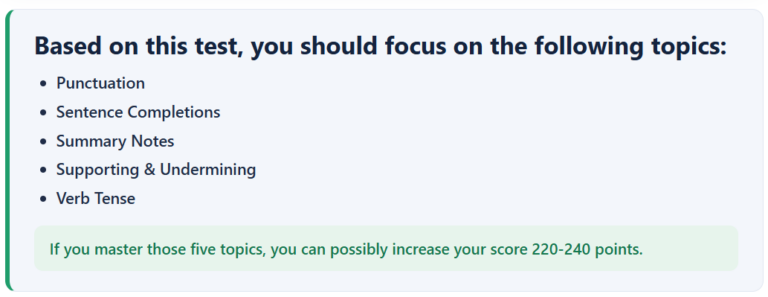
Want to Know What 5 Topics Will Improve Your SAT Score the Most?
Sample Feedback from our Diagnostic Test:
South Dakota School of Mines and Technology
The South Dakota School of Mines and Technology is a public science and engineering university in Rapid City with 2,071 undergraduates, and it reports the highest ACT range in the state. The middle half of admitted students landed between 24 and 30 on the ACT, so the top quarter sat at or above 30. SAT submitters scored 560 to 660 in Reading & Writing and 580 to 680 in Math. Residents pay $10,500 in tuition and fees and non-residents $14,900, both the highest public figures in South Dakota, against a total cost of attendance of $25,385. The School of Mines admits 80% of applicants.
A specialist engineering school draws applicants who have already decided they can handle the work, so the high range here reflects who applies rather than a hard admission bar.
Augustana University
Augustana University is a private Lutheran university in Sioux Falls with 1,965 undergraduates, and it is the most expensive college on this page at $55,159. Admitted students scored 21 to 27 on the ACT, with the top quarter at or above 27, and SAT submitters scored 570 to 680 in Reading & Writing and 580 to 690 in Math. Tuition and fees are $40,160. Augustana admits 68% of applicants, the second lowest rate in the state.
Dakota State University
Dakota State University is a public university in Madison with 2,071 undergraduates, and its largest college is the Beacom College of Computer and Cyber Sciences. Its admitted ACT range is 20 to 27, and the top quarter sat at or above 27. SAT submitters scored 570 to 680 in Reading & Writing and 620 to 760 in Math. In-state tuition and fees are $9,654 and out-of-state tuition is $12,756, against a total cost of attendance of $25,753. Dakota State admits 88% of applicants.
That Math range of 620 to 760 is the highest on this page by a wide margin, at a university admitting 88% of applicants. The section below on the SAT columns explains what is going on there, because the two score columns in this row do not describe the same group of students.
Dakota State and the School of Mines enroll exactly the same number of undergraduates at 2,071, and each is built around a narrow band of technical fields rather than a full spread of majors.
South Dakota State University
South Dakota State University is the largest university in the state with 9,198 undergraduates in Brookings, and it admits 98% of applicants. Admitted students scored 19 to 25 on the ACT, so the top quarter were at or above 25, and SAT submitters scored 530 to 610 in Reading & Writing and 530 to 630 in Math. Residents pay $9,299 in tuition and fees and non-residents $12,809, against a total cost of attendance of $24,636.
University of South Dakota
The University of South Dakota is the state’s flagship in Vermillion with 5,439 undergraduates, and the Sanford School of Medicine sits on this campus. The admitted ACT range here is 19 to 25, with the top quarter at or above 25. SAT submitters scored 530 to 620 in Reading & Writing and 595 to 695 in Math. Tuition and fees run $9,432 for residents and $12,942 for non-residents, against a total cost of attendance of $24,422, the third lowest on this page. The University of South Dakota admits 99% of applicants, the highest rate in the state.
A medical school on campus gives an undergraduate easier access to shadowing, research and people who read applications for a living. It does not give him an admissions advantage, and the section on Sanford below explains what actually does.
Mount Marty University
Mount Marty University is a private Benedictine university in Yankton with 697 undergraduates, and it admits 43% of applicants, the lowest rate in South Dakota. Admitted students scored 18 to 25 on the ACT, putting the top quarter at or above 25. Mount Marty reports no SAT data at all, and it is the only college on this page that reports one test and not the other. Tuition and fees are $34,600 against a total cost of attendance of $48,247.
Black Hills State University
Black Hills State University is a public university in Spearfish with 1,928 undergraduates, and it reports the lowest cost of attendance of the ten at $21,277. Its admitted ACT range runs 18 to 24, and the top quarter scored at or above 24. SAT submitters scored 465 to 565 in Reading & Writing and 500 to 570 in Math. Residents pay $8,764 in tuition and fees, the lowest resident figure in the state, and non-residents pay $11,866. Black Hills State admits 96% of applicants.
Northern State University
Northern State University is a public university in Aberdeen with 1,273 undergraduates and a 93% admit rate. The middle half of admitted students scored between 18 and 24 on the ACT, so the top quarter were at or above 24, and SAT submitters scored 490 to 590 in Reading & Writing and 490 to 570 in Math. In-state tuition and fees are $8,845 and out-of-state tuition is $11,947, against a total cost of attendance of $22,077.
University of Sioux Falls
The University of Sioux Falls is a private Christian university with 1,218 undergraduates, and it reports no admitted test scores. Tuition and fees are $21,750, the lowest private figure in South Dakota and lower than the resident tuition at several publics elsewhere in this series. Total cost of attendance is $34,274, and the university admits 83% of applicants.
Dakota Wesleyan University
Dakota Wesleyan University is a private Methodist university in Mitchell with 670 undergraduates, the smallest institution on this page, and it reports no admitted test scores. Tuition and fees are $33,790 against a total cost of attendance of $43,864. Dakota Wesleyan admits 73% of applicants.
Every South Dakota Junior Now Takes the ACT Free
South Dakota has made the ACT its official state assessment for eleventh graders. The South Dakota Department of Education states that beginning in spring 2026, all public school juniors take the ACT during the school day at no cost, online, in one of three testing windows running from February 24 to April 3. It replaces the separate state accountability test, so a junior planning to apply to college now takes one exam instead of two. Each student can also send up to four score reports to colleges for free.
That is one paid attempt, provided by the state, in the spring of junior year.
Additional attempts are a separate matter. The state pays for the in-school administration and nothing beyond it, so a student who wants a second score registers for a national ACT test date himself. The national ACT currently costs $70 without the writing section. South Dakota’s official college planning materials confirm that many students take the ACT more than once and that ACT produces a superscore combining a student’s highest section scores across test dates, but they do not address who pays for the additional sittings.
The arithmetic of that arrangement matters more in South Dakota than almost anywhere else, because of what the state attaches to the number.
The three published thresholds on one ACT scale. The state pays for one attempt and any others are the student’s own cost.
What Is an ACT Score Worth in South Dakota?
The South Dakota Opportunity Scholarship pays up to $7,500 over four years to a student who meets a published score threshold and attends a participating South Dakota institution. The Board of Regents pays it out as $1,500 in each of the first three years and $3,000 in the fourth, and participating institutions include the public universities, the private colleges and the technical colleges.
There are two ways to qualify, and both of them accept a superscore.
The first route asks for an ACT composite or superscore of 24 or higher, an unweighted high school grade point average of 3.0 on a 4.0 scale, and completion of the scholarship’s required coursework with a grade of C or higher in every required course. That coursework aligns with South Dakota’s Advanced Honors Endorsement.
The second route asks for an ACT composite or superscore of 28 or higher and drops the coursework and grade point requirements entirely.
South Dakota Codified Law 13-55-31 is the provision that sets the first route, and it is worth reading closely. The statute requires a student to have a composite score or superscore of 24 or higher on the ACT. Superscoring is written into the state law itself, not into a university’s discretionary policy. The admission standard at the public universities uses the same language, so a South Dakota student’s best section scores across test dates count toward both the money and the admission decision.
Nothing else in this series works that way. Oklahoma’s superscore allowance appears in a university admissions policy. Ohio and New York have individual pre-med and medical programs that explicitly refuse to superscore. South Dakota legislated it.
To keep the scholarship a student needs a cumulative 3.0 grade point average and has to clear credit benchmarks of 30, 60 and 90 hours as he goes. A student who falls below the grade point requirement can regain eligibility by bringing the cumulative average back to 3.0, but a student who misses a credit benchmark becomes permanently ineligible. The scholarship also carries no obligation to live or work in South Dakota after graduating. That is unusual among state awards of this kind.
What Does the ACT 28 Route Actually Require?
The ACT 28 route requires more than the scholarship’s own student-facing page says it does, and the discrepancy is worth knowing about before a student plans around it.
The Board of Regents page for the Opportunity Scholarship presents the second route as an ACT composite or superscore of 28 or higher with no curriculum requirement and no grade point requirement, and it lists nothing else.
The Board of Regents’ own 2025 report on the scholarship describes the same route as requiring an ACT composite or superscore of 28 plus minimum subject scores of 18 in English, 22 in Reading, 22 in Math and 23 in Science. Those four numbers are ACT’s own College Readiness Benchmarks. South Dakota Codified Law 13-55-31.2, the provision behind this route, also attaches subject-level benchmark requirements to it.
A student can reach a 28 composite and still miss one of those subject floors. Science at 23 is the one most likely to catch somebody out, because a strong English and reading performance can carry a composite upward while the science score lags.
Both documents come from the Board of Regents and they do not say the same thing. A student relying on the 28 route should confirm the subject requirements with the Board of Regents in writing before treating the composite alone as sufficient.
Is There a Published SAT Equivalent?
There is a published SAT equivalent for every South Dakota threshold, and the numbers are easier to find in the Board of Regents’ report than on the student-facing pages.
The statute itself does not name an SAT number. It defers to an equivalent score as determined by the Board of Regents. The student-facing scholarship page lists ACT thresholds only and gives no SAT figure at all.
The Board of Regents’ 2025 scholarship report supplies both. For the first route it gives a combined SAT verbal and math score of 1180 for students tested after March 2016. For the second route it gives 1310.
Those two numbers are not approximations. On the official ACT and SAT concordance published by ACT, an ACT composite of 24 corresponds to an SAT total of 1180 and an ACT composite of 28 corresponds to 1310, exactly. The admission threshold works the same way, with an ACT of 18 set against an SAT of 970. That is again the precise concordance value.
South Dakota has used the published concordance without adjusting it anywhere. An SAT student can therefore work out where he stands against any South Dakota threshold by reading the official concordance table, and he should still confirm the figure with the institution, because the student-facing pages do not carry it.
What Score Do South Dakota Public Universities Require?
South Dakota’s six public universities accept an ACT composite or superscore of 18, an SAT total of 970, or any one of three other alternatives. The standard is set by the Board of Regents and applies at South Dakota State, the University of South Dakota, the School of Mines, Dakota State, Black Hills State and Northern State.
A student qualifies by meeting any one of the following:
- An ACT composite or superscore of 18
- A combined SAT Reading & Writing and Math score of 970
- Rank in the top 60% of the high school graduating class
- A high school cumulative grade point average of 2.6 or higher
- Level 3 or higher on both the English Language Arts and Mathematics Smarter Balanced assessments
Applicants are also expected to complete the specified core courses with a C average or better.
One caution on that list. The Smarter Balanced option still appears in the current admission requirements, and the Department of Education has made the ACT the state assessment for juniors beginning in spring 2026. Those two facts sit awkwardly together, because the assessment the fifth option refers to is the one the ACT replaced. The option is still published, so it is listed here as published, and a student intending to rely on it should confirm it applies to his graduating class.
The practical shape of all this is two numbers doing two different jobs. An 18 opens the door to any public university in South Dakota. A 24 with the coursework, or a 28 without it, opens up to $7,500. The distance between the admission threshold and the scholarship threshold is six ACT points, and it is ten points to the route that ignores the transcript.
Why Do Two Colleges Report SAT Scores Above Their ACT Scores?
Two colleges on this page report SAT ranges well above what their ACT ranges would predict, and the reason is that the two columns describe different groups of students.
Start with the arithmetic caveat, because it applies to every comparison of this kind. The table reports each SAT section separately, and adding two section percentiles produces a number higher than a college’s real composite range, normally by approximately 20 points at each end. Any comparison between the columns has to allow for that before it means anything.
Allowing for it, most of this table holds together. Black Hills State reports an ACT range of 18 to 24, which the official concordance puts at 970 to 1180, against SAT sections summing to 965 and 1135. Northern State’s ACT range of 18 to 24 sits against sums of 980 and 1160. The School of Mines reports an ACT range of 24 to 30, worth 1180 to 1370 on the concordance, against sums of 1140 and 1340, so its SAT figures come in slightly below its ACT figures. South Dakota State is close to even.
Two colleges are not close to even.
Dakota State reports an ACT range of 20 to 27. On the concordance that is an SAT of 1040 to 1280. Its reported SAT sections sum to 1190 and 1440. After subtracting the 20-point summing effect at each end, the SAT figures still sit approximately 130 points above the ACT figures at the bottom of the range and 140 above at the top, at a university that admits 88% of applicants.
The University of South Dakota reports an ACT range of 19 to 25, worth 1010 to 1210, against SAT sections summing to 1125 and 1315. That is approximately 95 points high at the bottom and 85 at the top after the same correction.
The likeliest explanation is self-selection, and it is worth understanding because it generalizes past South Dakota. This is an ACT state, and from spring 2026 it will be more so, since every public school junior receives an ACT without asking for one. A South Dakota student who sits the SAT anyway has gone out of his way to register and pay for a second, different exam, and students who do that are normally applying somewhere specific that favors it. They are not a cross-section of the admitted class. They are a small group with a particular reason.
Each college’s ACT range converted to its SAT equivalent, drawn beside the SAT range it actually reports. The few South Dakota students who sit the SAT are not a random sample of anything.
For a South Dakota student the practical reading is straightforward. The ACT column describes the students a college admits. At Dakota State and the University of South Dakota, the SAT column describes a different and stronger group, and a student should not treat those SAT numbers as the bar he has to clear.
South Dakota Has One Medical School and It Asks Where You Studied
The University of South Dakota Sanford School of Medicine in Vermillion is the only medical school in South Dakota. It holds full accreditation from the Liaison Committee on Medical Education and awards the MD, the degree held by most practicing physicians in the United States. No osteopathic college, which awards the DO, operates in the state.
Sanford restricts who may apply, and it states the restriction plainly. An applicant must be a United States citizen or permanent resident, and must be a South Dakota resident or a non-resident with strong ties to the state.
Sanford lists the qualifying ties:
- Graduation from a high school in South Dakota
- Completing at least 90 credits at a college or university in South Dakota
- A parent living in South Dakota
- Being the child of a Sanford School of Medicine alumnus
- Membership of a United States federally recognized tribe from a bordering state
The two tiers that follow are stated more directly than at most medical schools. Residents of South Dakota are granted an opportunity to interview. Non-residents with strong ties are reviewed for possible invitation to interview. Residency produces an interview. A tie produces consideration for one.
The second tie on that list is the one a high school student can still act on. Ninety credits is approximately three years of full-time study, and it is a credit count rather than a completed degree. A student who starts somewhere else and transfers into a South Dakota university with enough time to accumulate 90 credits qualifies on the same footing as one who spent all four years in the state.
The rest of Sanford’s published bar is conventional. An applicant needs a cumulative grade point average of at least 3.1 and a composite MCAT score of at least 496 to be offered an interview, with the MCAT taken within three years of the November 1 AMCAS deadline. Applications run through AMCAS between June 1 and November 1. A student below the 3.1 may be considered case by case with an MCAT at or above 496 and recent coursework showing stronger performance.
Sanford also added two seats specifically for applicants through the Indians Into Medicine program, beginning with the entering class of 2015. INMED is open to applicants who are enrolled members of United States federally recognized tribes, and applicants apply to it separately with tribal documentation. A named number of reserved seats is more than most medical schools publish. The INMED program itself is based at the University of North Dakota, so South Dakota reserves seats against a program its neighbour runs, and this is also where the two tribal colleges named earlier connect to the page.
South Dakota has no BS/MD or early assurance program. There is no route in this state that settles medical school admission while a student is still in high school, so an ACT score here buys college options and scholarship money rather than a place in a medical class.
Four States, Four Different Versions of the Same Rule
Four consecutive states in this series tie medical school standing to where a student did his undergraduate degree, and all four do it differently. A student who learned the rule in one of them will get it wrong in the next.
North Carolina’s Brody School of Medicine runs a binary gate. An applicant is a North Carolina resident or holds a UNC System degree earned within five years, and an applicant who is neither may not apply at all.
Oregon’s OHSU writes four criteria into a numbered policy, any one of which qualifies, and the result is preference rather than eligibility.
South Dakota’s Sanford grants residents an interview and reviews tied non-residents for possible invitation, with the undergraduate tie set at 90 credits rather than a finished degree.
North Dakota’s UND treats a North Dakota degree as one tie among several inside a preference order.
The instruction that follows is the same in every case. Read the actual admissions page of the medical school a student cares about. Four neighbouring states wrote four different rules, and the one he learned last does not travel.
What If Your Scores Are Below the Range You Want?
A South Dakota student whose score sits below the range he wants is normally not facing an admission problem. He is facing a money problem, and that is a more tractable one.
Admission is close to automatic at the two universities most South Dakota students attend. South Dakota State admits 98% of applicants and the University of South Dakota 99%, and the published standard is an ACT of 18 or any one of four alternatives. Black Hills State admits 96% and Northern State 93%.
What the score actually decides is the Opportunity Scholarship, and the gaps are small. The midpoint of the admitted ACT range is 22 at both South Dakota State and the University of South Dakota, so a typical admitted student at either is two points short of the 24 that qualifies for the first route. At Black Hills State and Northern State the midpoint is 21, three points short. Dakota State’s midpoint is within half a point of the threshold.
Two ACT points is a small target. Our students since 2008 have normally needed approximately 40 hours of focused work to move a score meaningfully and approximately 80 hours for a larger jump, with an ACT point worth approximately 25 to 30 SAT points, so the hours convert between the tests.
Two features of South Dakota’s system make that work pay off more than it would elsewhere.
The first is the superscore. Because the statute and the admission standard both accept a composite or superscore, the points do not have to arrive on the same morning. A student who gains two points in Math on one sitting and holds his English can combine them.
The second is the arithmetic of a retake. A national ACT registration costs $70. Moving a 23 to a 24 is worth up to $7,500 in state scholarship money and nothing else about the application has to change. There is no other decision in a South Dakota student’s college planning with that ratio in it.
A student who wants to know where he actually stands before committing hours should sit a full timed practice test first. Take a free diagnostic and work from a real score rather than an impression of one. Our guide on how to improve your SAT score sets out the method, and the ACT conversion above makes it apply either way.
Should a South Dakota Student Take the SAT at All?
A South Dakota student should normally plan around the ACT and treat the SAT as something he adds for a specific reason.
Four facts point the same way. The state gives every public school junior an ACT free during the school day. All three published thresholds, for admission and both scholarship routes, are written in ACT points. Eight of the ten colleges on this page report an ACT composite and one reports an ACT and no SAT. And the SAT ranges two of these colleges publish describe a small self-selected group rather than their admitted classes.
The reasons to add the SAT are real but narrow. A student applying out of state to colleges that prefer it has an obvious case. So does a student who sits timed practice tests of both and finds the formats suit him differently, which does happen, because the SAT’s adaptive sections and the ACT’s tighter timing reward different habits. Outside those cases, a second exam is hours spent for no additional option.
What If Your Scores Are Below the Range You Want?
Being below a school’s published range doesn’t disqualify anyone. A quarter of the students admitted to every school on this list scored below its lower number.
It does mean the score isn’t helping the application, and at a selective school that matters more than at a less selective one. The number worth aiming for is the upper end of a school’s range, the one the top quarter cleared, rather than the middle. The reasoning behind that is on what SAT score you need for college.
Reading the sections separately is the useful part. If your Math sits inside a school’s range and your Reading & Writing doesn’t, you know which section your hours should go to, and that’s a more specific answer than a total score gives you.
The gap is measurable and so is the work to close it. A 70 to 130 point improvement takes approximately 40 hours of effective studying, based on the students we’ve worked with since 2008, and a 130 to 250 point improvement takes approximately 80.
How to improve your SAT score covers the method, including how to work out which topics are actually costing you points. If you don’t have a recent score to compare against this list, a free diagnostic SAT gives you one, broken down by section and by topic.
How to Read These Score Ranges
Every range on this page covers the middle 50% of admitted students who submitted that score. A quarter of admitted students scored below the lower figure, and the top quarter scored at or above the upper one.
Two things follow that students regularly get wrong.
A score below the lower number does not rule a student out, because a quarter of the admitted class was there. And a score just above the lower number is weaker than it looks, because it sits at the bottom of the middle half rather than in the middle.
Three further cautions apply to this page specifically.
Two colleges here report no test data at all, so for the University of Sioux Falls and Dakota Wesleyan there is no published figure of any kind to compare against. Mount Marty reports an ACT and no SAT.
The SAT columns at Dakota State and the University of South Dakota sit well above the SAT equivalents of their ACT ranges, by more than the summing effect explains. The section above works through why.
And every range on this page describes students who chose to submit a score. Where a college is test-optional, students with stronger scores submit them and students with weaker ones often do not, so the published range describes the submitters rather than a standard the college applied. Our guides on what SAT score you need for college and test-optional colleges go through what that means for a specific application.
Pre-Med Programs in Nearby States
South Dakota borders six states, and a pre-med student here has reason to look at all of them. North Dakota, Minnesota, Iowa, Nebraska, Wyoming and Montana are all within driving distance of some part of the state.
Leaving has a specific cost in South Dakota. The Opportunity Scholarship requires attendance at a participating South Dakota institution, so a student who enrolls out of state forfeits up to $7,500. A student who is choosing between a South Dakota public university and a neighbouring one should put that figure into the comparison rather than treating the scholarship as separate from the college decision.
South Dakota is also a destination, for the reason the table showed. Every public university in the state charges out-of-state students less than $15,000 in tuition and fees, so a student from Minnesota or Iowa can attend a South Dakota public university for less than many residents pay at home.
Our pages for North Dakota, Minnesota, Iowa, Nebraska and Montana cover the colleges, costs and medical school rules in each.
Pre-Med Colleges in Other States
Every state page in this series follows the same format, with admitted score ranges, costs, admit rates and the state’s own medical school and scholarship rules. Our pre-med colleges by state index lists all of them.

Glyn Caddell
Glyn Caddell holds a BS in Mechanical Engineering from NJIT and has been tutoring New York City students since 2008. He founded Caddell Prep in 2012 and is the author of Digital SAT Math Secrets: Lessons & Tricks to Quickly Improve to a Perfect 800 on the Math Test, which contains over 900 practice problems and is used in Caddell Prep’s SAT math classes. He is founding president of the Staten Island Technical High School alumni association and teaches every lesson on this site personally.
Finally, an SAT course that students actually understand
Every question has a video explanation. Not most — every one.
The on-demand Digital SAT course covers all 17 math topics and 15 reading and writing topics, with 5 full-length practice tests and a 100-point score increase guarantee. Keep access for the rest of high school. No subscription.
Want to Know What 5 Topics Will Improve Your SAT Score the Most?
Sample Feedback from our Diagnostic Test: