
Home » College SAT Score Ranges, Costs, and Programs by Major and State » Best Pre-Med Colleges » Pre-Med Colleges in Iowa: SAT Scores, ACT Scores, Costs, and Programs
By Glyn Caddell, BSME · Author of Digital SAT Math Secrets · Tutoring since 2008 — Updated October 6, 2026
Twelve Iowa colleges with pre-med programs, what they cost, and the test scores of the students they admit.
The table gives ACT ranges alongside SAT ranges, because more Iowa colleges report ACT data than SAT data. Three of the colleges below publish an ACT range and no SAT range at all.
Iowa also has two medical schools that take almost opposite approaches to in-state applicants. That comes after the table.
Table of Contents
- Iowa Pre-Med Colleges by Test Score
- Iowa’s Two Medical Schools Face Opposite Directions
- Does Iowa Have a Scholarship Tied to Test Scores?
- What If Your Scores Are Below the Range You Want?
Iowa Pre-Med Colleges by Test Score
| College | SAT Reading & Writing | SAT Math | ACT composite | Cost of attendance | Undergraduates | Admit rate |
|---|---|---|---|---|---|---|
| Grinnell College | 700 to 750 | 710 to 790 | 31 to 34 | $83,440 | 1,729 | 15% |
| Simpson College | Not reported | Not reported | 31 to 33 | $61,227 | 1,227 | 86% |
| Drake University | 580 to 680 | 530 to 670 | 24 to 29 | $64,835 | 2,543 | 64% |
| Cornell College | 575 to 655 | 545 to 630 | 23 to 30 | $66,249 | 1,086 | 80% |
| Coe College | 540 to 640 | 530 to 650 | 23 to 29 | $67,372 | 1,164 | 64% |
| Luther College | 550 to 668 | 528 to 738 | 22 to 29 | $65,461 | 1,379 | 72% |
| Dordt University | 540 to 670 | 530 to 660 | 21 to 29 | $51,733 | 1,597 | 68% |
| Iowa State University | 560 to 670 | 560 to 690 | 21 to 28 | $24,018 | 25,367 | 89% |
| University of Iowa | 570 to 670 | 560 to 660 | 21 to 28 | $28,596 | 22,264 | 84% |
| Wartburg College | 470 to 620 | 460 to 580 | 21 to 27 | $64,359 | 1,452 | 76% |
| University of Northern Iowa | 520 to 650 | 500 to 630 | 19 to 26 | $22,278 | 7,529 | 93% |
| University of Dubuque | 490 to 610 | 490 to 610 | 18 to 24 | $53,806 | 1,440 | 89% |
Each range covers the middle 50% of admitted students who submitted that test. A quarter scored below the lower number, and the top quarter scored at or above the upper one. Being under the lower number does not rule a student out, and being just above it is not as safe as it looks.
Sorted by ACT composite, because more Iowa colleges report it. The College Board and ACT publish an official concordance if you want to compare a score across the two tests.
Four things in that table deserve attention.
Simpson College reports an ACT range of 31 to 33 while admitting 86% of applicants, and publishes no SAT data at all. That is the most extreme example of a self-selecting submitter pool in this whole series. A small number of students send scores, those students are strong, and the published range describes them rather than the admitted class. Read it as information about who submits, not about who gets in.
Cost separates Iowa’s colleges far more than admission does. Northern Iowa is $22,278, Iowa State $24,018 and Iowa $28,596. Grinnell is $83,440 and Coe, Cornell, Luther and Drake all sit above $64,000. The private colleges cost approximately three times the public ones.
Admission is not the constraint at most Iowa colleges. Northern Iowa admits 93%, Iowa State 89%, Dubuque 89% and Simpson 86%. Several Iowa colleges outside this table admit 96% or more.
Luther College reports a Math range of 528 to 738, which is 210 points wide. The next widest on this page is Drake at 140 points. A range that wide means the college admits across a broad band of preparation, so a score at the lower end is genuinely inside what it takes.
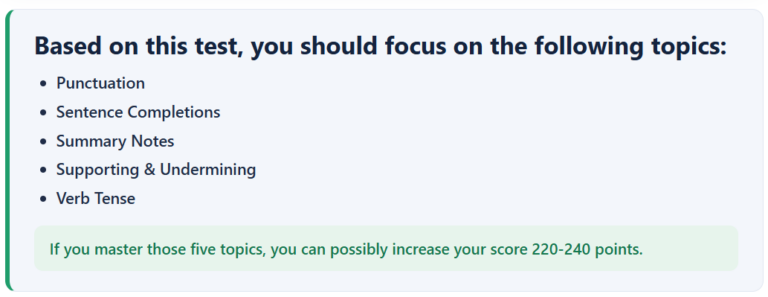
Want to Know What 5 Topics Will Improve Your SAT Score the Most?
Sample Feedback from our Diagnostic Test:
Grinnell College
Grinnell College is a private liberal arts college in Grinnell with 1,729 undergraduates, and it is by a wide margin the most selective institution in the state.
SAT Reading & Writing 700 to 750, SAT Math 710 to 790, ACT composite 31 to 34. The top quarter of admitted students scored at or above 750, 790 and 34. Cost of attendance $83,440, with tuition and fees at $67,560 and substantial need-based aid available. 1,729 undergraduates, 15% admitted.
Simpson College
Simpson College is a private liberal arts college in Indianola with 1,227 undergraduates.
The college does not report SAT data. ACT composite 31 to 33, with the top quarter at or above 33. Cost of attendance $61,227, with tuition and fees at $45,916. 1,227 undergraduates, 86% admitted.
Treat that ACT range carefully. An 86% admit rate alongside a 31 to 33 composite means very few applicants are submitting scores, and the ones who do are strong.
Drake University
Drake University is a private university in Des Moines with 2,543 undergraduates, in the city that houses the state’s osteopathic medical school.
SAT Reading & Writing 580 to 680, SAT Math 530 to 670, ACT composite 24 to 29. The top quarter scored at or above 680, 670 and 29. Cost of attendance $64,835, with tuition and fees at $53,174. 2,543 undergraduates, 64% admitted.
Cornell College
Cornell College is a private liberal arts college in Mount Vernon with 1,086 undergraduates, the smallest school on this page.
SAT Reading & Writing 575 to 655, SAT Math 545 to 630, ACT composite 23 to 30. The top quarter scored at or above 655, 630 and 30. Cost of attendance $66,249, with tuition and fees at $53,064. 1,086 undergraduates, 80% admitted.
Coe College
Coe College is a private liberal arts college in Cedar Rapids with 1,164 undergraduates.
SAT Reading & Writing 540 to 640, SAT Math 530 to 650, ACT composite 23 to 29. The top quarter scored at or above 640, 650 and 29. Cost of attendance $67,372, with tuition and fees at $55,500. 1,164 undergraduates, 64% admitted.
Luther College
Luther College is a private liberal arts college in Decorah with 1,379 undergraduates, and it reports the widest Math range on this page.
SAT Reading & Writing 550 to 668, SAT Math 528 to 738, ACT composite 22 to 29. The top quarter scored at or above 668, 738 and 29. Cost of attendance $65,461, with tuition and fees at $52,920. 1,379 undergraduates, 72% admitted.
Dordt University
Dordt University is a private Christian university in Sioux Center with 1,597 undergraduates, and it is the least expensive private college on this page.
SAT Reading & Writing 540 to 670, SAT Math 530 to 660, ACT composite 21 to 29. The top quarter scored at or above 670, 660 and 29. Cost of attendance $51,733, with tuition and fees at $38,740. 1,597 undergraduates, 68% admitted.
Iowa State University
Iowa State University is in Ames with 25,367 undergraduates, the largest school on this page, and it has strong science and veterinary medicine programmes.
SAT Reading & Writing 560 to 670, SAT Math 560 to 690, ACT composite 21 to 28. The top quarter scored at or above 670, 690 and 28. Cost of attendance $24,018, with tuition and fees at $10,497 in-state and $27,153 out-of-state. 25,367 undergraduates, 89% admitted.
University of Iowa
The University of Iowa is in Iowa City with 22,264 undergraduates, and it runs the Roy J. and Lucille A. Carver College of Medicine on the same campus.
SAT Reading & Writing 570 to 670, SAT Math 560 to 660, ACT composite 21 to 28. The top quarter scored at or above 670, 660 and 28. Cost of attendance $28,596, with tuition and fees at $11,676 in-state and $34,278 out-of-state. 22,264 undergraduates, 84% admitted.
Of every college on this page, this is the one where a pre-med undergraduate is closest to a teaching hospital.
Wartburg College
Wartburg College is a private Lutheran college in Waverly with 1,452 undergraduates.
SAT Reading & Writing 470 to 620, SAT Math 460 to 580, ACT composite 21 to 27. The top quarter scored at or above 620, 580 and 27. Cost of attendance $64,359, with tuition and fees at $51,200. 1,452 undergraduates, 76% admitted.
University of Northern Iowa
The University of Northern Iowa is in Cedar Falls with 7,529 undergraduates and the lowest cost of attendance on this page.
SAT Reading & Writing 520 to 650, SAT Math 500 to 630, ACT composite 19 to 26. The top quarter scored at or above 650, 630 and 26. Cost of attendance $22,278, with tuition and fees at $9,598 in-state and $21,730 out-of-state. 7,529 undergraduates, 93% admitted.
University of Dubuque
The University of Dubuque is a private university in Dubuque with 1,440 undergraduates.
SAT Reading & Writing 490 to 610, SAT Math 490 to 610, ACT composite 18 to 24. The top quarter scored at or above 610 in both SAT sections and 24 on the ACT. Cost of attendance $53,806, with tuition and fees at $38,970. 1,440 undergraduates, 89% admitted.
Iowa's Two Medical Schools Face Opposite Directions
Iowa has two medical schools and an Iowa student’s residency advantage applies to only one of them.
The University of Iowa Roy J. and Lucille A. Carver College of Medicine in Iowa City is the state’s only MD programme. Approximately 66% of its students are Iowa residents, and admissions sources describe a strong preference for in-state applicants. Its median MCAT sits around 514 to 516.
Des Moines University College of Osteopathic Medicine in West Des Moines is the state’s DO programme. Approximately 84% of its class comes from outside Iowa, so approximately one student in six is an Iowan. It was founded in 1898 and is described as the second-oldest osteopathic medical college in the country. Its median MCAT sits around 507 to 509.
So the state’s MD programme is substantially an Iowa school for Iowa students, and the DO programme is a national school that happens to be in Iowa. A student from Des Moines applying to the medical school in his own city is competing largely against applicants from everywhere else.
That is worth knowing before anyone assumes two in-state options means two in-state advantages.
None of this decides where to do an undergraduate degree. Medical school applications are national, and a student at an Iowa college without a medical school nearby is not disadvantaged applying to one. What a nearby medical school changes is how easy it is to arrange shadowing and research while you are still an undergraduate, which is a practical matter during the degree.
Verify both percentages and both MCAT figures with the schools before relying on them, since they come from third-party admissions guides rather than the universities.
Does Iowa Have a Scholarship Tied to Test Scores?
Iowa’s main state aid programmes do not use test scores.
The Iowa Tuition Grant and the All Iowa Opportunity Scholarship are need-based and merit-and-need based respectively, rather than keyed to a specific SAT or ACT number. There is no Iowa equivalent of Florida’s Bright Futures or Georgia’s Zell Miller, where a particular score unlocks a particular amount of state money.
Where scores do work in Iowa is institutional merit aid. Individual colleges set their own thresholds, and in Iowa most of those thresholds are expressed as ACT scores because that is what applicants submit. If merit money matters to your plan, check each college’s scholarship page directly and note which test it names.
Verify current criteria with the Iowa College Student Aid Commission, since state aid rules change.
What If Your Scores Are Below the Range You Want?
Being below a school’s published range doesn’t disqualify anyone. A quarter of the students admitted to every school on this list that reports a range scored below its lower number.
Iowa is a state where that matters less than usual for in-state admission. Northern Iowa admits 93%, Iowa State 89%, Dubuque 89% and Simpson 86%. The score is not what stands between most Iowa students and an Iowa college.
Where it does work is out-of-state applications and institutional merit aid, and in Iowa that second one is the bigger prize. With private colleges here costing approximately three times the publics, a merit award is often the difference between a private college being possible and not.
The number worth aiming for is the upper end of a school’s range, the one the top quarter cleared, rather than the middle. The reasoning behind that is on what SAT score you need for college.
The gap is measurable and so is the work to close it. A 70 to 130 point improvement takes approximately 40 hours of effective studying, based on the students we’ve worked with since 2008, and a 130 to 250 point improvement takes approximately 80.
How to improve your SAT score covers the method, including how to work out which topics are actually costing you points. If you don’t have a recent score to compare against this list, a free diagnostic SAT gives you one, broken down by section and by topic.
Should You Take the ACT Instead?
Iowa reports more ACT data than SAT data, and the gap is wide enough to be worth acting on.
Of the 23 four-year Iowa colleges with more than 1,000 undergraduates, 17 report an ACT composite range and 14 report SAT section ranges. The ACT has been the dominant test in Iowa for decades, and ACT itself is headquartered in Iowa City, in the same town as the University of Iowa.
We sell SAT preparation, so the honest answer is worth stating plainly. If every college on your list is in Iowa, the ACT is the more common submission and either test is accepted. If you are applying outside Iowa, particularly east or west, the SAT is the more common currency. The question is which one your list rewards.
How to Read These Score Ranges
Every range on this page covers the middle 50% of admitted students who submitted that test. The lower number is the 25th percentile and the upper number is the 75th, which means a quarter of admitted students scored at or above it.
Iowa needs one extra caution. When most students in a state sit the ACT, the group submitting SAT scores is smaller and more self-selecting, so an Iowa SAT range describes a narrower slice of applicants than the same figure would in a state where the SAT dominates. Simpson College is the clearest case, reporting a 31 to 33 ACT composite while admitting 86% of applicants.
Because most colleges are now test-optional, the ranges that are published describe only the students who chose to submit at all. Students with strong scores submit and students with weak ones don’t, so a published range sits higher than the range for everyone who was actually admitted. More on test-optional colleges.
Six Iowa colleges over 1,000 undergraduates report neither SAT nor ACT data. For those schools there is no published figure of any kind to compare against, and the rest of the application carries the weight.
Pre-Med Programs in Nearby States
Iowa sits between Illinois, Minnesota, Missouri, Nebraska, Wisconsin and South Dakota, and Iowa students apply across those borders in numbers.
See pre-med colleges in Illinois, pre-med colleges in Minnesota, and pre-med colleges in Missouri.
Pre-Med Colleges in Other States
We publish the same breakdown for pre-med programs in every state.
See pre-med colleges by state for the full list.

Glyn Caddell
Glyn Caddell holds a BS in Mechanical Engineering from NJIT and has been tutoring New York City students since 2008. He founded Caddell Prep in 2012 and is the author of Digital SAT Math Secrets: Lessons & Tricks to Quickly Improve to a Perfect 800 on the Math Test, which contains over 900 practice problems and is used in Caddell Prep’s SAT math classes. He is founding president of the Staten Island Technical High School alumni association and teaches every lesson on this site personally.
Finally, an SAT course that students actually understand
Every question has a video explanation. Not most — every one.
The on-demand Digital SAT course covers all 17 math topics and 15 reading and writing topics, with 5 full-length practice tests and a 100-point score increase guarantee. Keep access for the rest of high school. No subscription.
Want to Know What 5 Topics Will Improve Your SAT Score the Most?
Sample Feedback from our Diagnostic Test: