
Home » College SAT Score Ranges, Costs, and Programs by Major and State » Best Pre-Med Colleges » Pre-Med Colleges in Connecticut: SAT Scores, Costs, and Programs
By Glyn Caddell, BSME · Author of Digital SAT Math Secrets · Tutoring since 2008 — Updated October 1, 2026
Connecticut has three medical schools and one of them admits students directly from high school.
That matters more than anything else on this page, because it means a Connecticut student can apply to medical school now rather than in four years.
This page covers that program, where to do the undergraduate degree, what each school costs, and the SAT scores of the students they admit. Scores are given by section rather than as a single total, because a student at 680 Reading & Writing and 590 Math is in a different position from a student at 590 and 680.
Table of Contents
- Colorado Pre-Med Colleges by SAT Score
- Colorado Has Two Medical Schools
- Five Colorado Students a Year Get Into Medical School Without the MCAT
- The Air Force Academy Costs Nothing and Almost No One Lists It
- What If Your Scores Are Below the Range You Want?
Connecticut Pre-Med Colleges by SAT Score
| College | Reading & Writing | Math | Cost of attendance | Undergraduates | Admit rate |
|---|---|---|---|---|---|
| Yale University | 730 to 780 | 740 to 790 | $88,300 | 6,758 | 4% |
| Wesleyan University | 705 to 760 | 710 to 780 | $89,020 | 3,067 | 16% |
| Connecticut College | 690 to 760 | 660 to 740 | $84,623 | 1,937 | 37% |
| Trinity College | 658 to 740 | 640 to 730 | $87,840 | 2,146 | 29% |
| Fairfield University | 630 to 700 | 630 to 690 | $76,074 | 5,373 | 33% |
| United States Coast Guard Academy | 620 to 700 | 620 to 700 | No tuition | 1,108 | 22% |
| University of Connecticut | 610 to 710 | 600 to 730 | $39,426 | 19,835 | 52% |
| Quinnipiac University | 580 to 660 | 570 to 660 | $72,215 | 6,531 | 72% |
| University of Hartford | 570 to 660 | 550 to 650 | $64,729 | 4,146 | 96% |
| Sacred Heart University | Does not report SAT data | Does not report SAT data | $69,289 | 7,087 | 65% |
Each range covers the middle 50% of admitted students who submitted scores. A quarter scored below the lower number, and the top quarter scored at or above the upper one. Being under the lower number does not rule a student out, and being just above it is not as safe as it looks.
Two things in that table are worth naming.
Connecticut is expensive. Four colleges sit above $84,000 for cost of attendance. UConn is $39,426, which is less than half, and its in-state tuition is $21,044.
Admit rate and score range are not the same measure. The University of Hartford admits 96% of applicants and reports ranges of 570 to 660 and 550 to 650, which are higher than several far more selective schools in other states. A low admit rate tells you how many people applied relative to places. A score range tells you who enrolled.
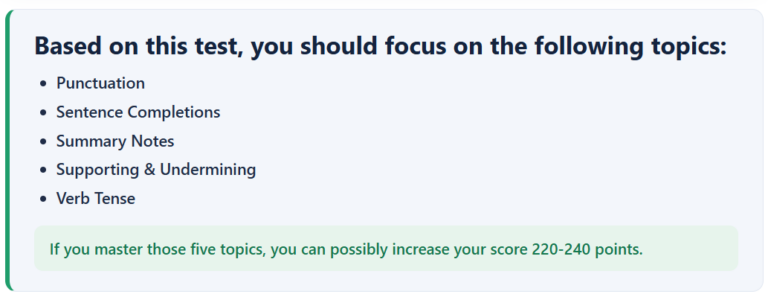
Want to Know What 5 Topics Will Improve Your SAT Score the Most?
Sample Feedback from our Diagnostic Test:
Yale University
Yale University is in New Haven and is the most selective institution in Connecticut, admitting 4% of applicants. Its own medical school is the oldest in the state.
Reading & Writing 730 to 780, Math 740 to 790. The top quarter of admitted students scored at or above 780 and 790. Cost of attendance $88,300, with tuition and fees at $67,250 and substantial need-based aid available. 6,758 undergraduates, 4% admitted.
Wesleyan University
Wesleyan University is a liberal arts college in Middletown with 3,067 undergraduates and the most expensive cost of attendance on this page.
Reading & Writing 705 to 760, Math 710 to 780. The top quarter scored at or above 760 and 780. Cost of attendance $89,020, with tuition and fees at $70,342. 3,067 undergraduates, 16% admitted.
Connecticut College
Connecticut College is a liberal arts college in New London with 1,937 undergraduates, the smallest school on this page.
Reading & Writing 690 to 760, Math 660 to 740. The top quarter scored at or above 760 and 740. Cost of attendance $84,623, with tuition and fees at $67,242. 1,937 undergraduates, 37% admitted.
Trinity College
Trinity College is a liberal arts college in Hartford, in the same city as several of the state’s major hospitals.
Reading & Writing 658 to 740, Math 640 to 730. The top quarter scored at or above 740 and 730. Cost of attendance $87,840, with tuition and fees at $70,770. 2,146 undergraduates, 29% admitted.
Fairfield University
Fairfield University is a Jesuit university on the coast with 5,373 undergraduates and a health sciences emphasis.
Reading & Writing 630 to 700, Math 630 to 690. The top quarter scored at or above 700 and 690. Cost of attendance $76,074, with tuition and fees at $58,350. 5,373 undergraduates, 33% admitted.
University of Connecticut
The University of Connecticut is the state flagship, in Storrs, and the home of the Special Program in Medicine described above. It is also by far the least expensive four-year option on this page for a Connecticut resident.
Reading & Writing 610 to 710, Math 600 to 730. The top quarter scored at or above 710 and 730. Cost of attendance $39,426, with tuition and fees at $21,044 in-state and $43,712 out-of-state. 19,835 undergraduates, 52% admitted.
Quinnipiac University
Quinnipiac University is in Hamden and runs the Frank H. Netter MD School of Medicine, which makes it the only undergraduate college on this page with its own medical school.
Reading & Writing 580 to 660, Math 570 to 660. The top quarter scored at or above 660 in both sections. Cost of attendance $72,215, with tuition and fees at $55,480. 6,531 undergraduates, 72% admitted.
University of Hartford
The University of Hartford has 4,146 undergraduates and admits 96% of applicants, the highest admit rate on this page.
Reading & Writing 570 to 660, Math 550 to 650. The top quarter scored at or above 660 and 650. Cost of attendance $64,729, with tuition and fees at $49,075. 4,146 undergraduates, 96% admitted.
Sacred Heart University
Sacred Heart University is in Fairfield with 7,087 undergraduates, which makes it the largest private university on this page.
The university does not report SAT score data. Cost of attendance $69,289, with tuition and fees at $50,404. 7,087 undergraduates, 65% admitted.
You Can Apply to a Connecticut Medical School From High School
The University of Connecticut runs a Special Program in Medicine that admits entering first-year students to a combined BS/MD pathway. Four years of undergraduate study at UConn, then four years at UConn School of Medicine, with both degrees from UConn.
Applicants must be entering as first-year students. That means this is a program you apply to as a high school senior, alongside your regular college applications, not something you apply for later as an undergraduate.
What the program requires.
- An overall secondary school GPA of at least 3.5 on a 4.0 scale
- Two letters of recommendation highlighting your interest in medicine, due 8 November
- An interview with the Special Program in Medicine Committee, by invitation only
- Demonstrated healthcare experience, which UConn describes as including observation, EMS activity, hospital volunteering, physician shadowing or hospice service
- Three supplemental essays
- Admission to the undergraduate honors college
There is no state residency requirement, though Connecticut residents receive special consideration, and international students are eligible.
What UConn says about the SAT, and it’s worth being accurate here.
UConn sets no minimum SAT score for this program. We sell SAT preparation and that’s still the honest answer.
What the score does is sit inside a much larger academic picture. Reported acceptance to the program runs in the range of 6 to 8%, and a committee being asked to admit an eighteen-year-old to medical school reads everything: the transcript, the course rigor, the healthcare experience, the essays and the interview. The SAT is part of that without being a threshold you clear.
So the useful framing isn’t that you need a particular number. It’s that nothing in your academic record should raise a question, and the timeline is a year earlier than you’d expect, because you’re applying from high school.
UConn runs the same structure for dental medicine and for law.
Details and current deadlines are on UConn’s Special Program in Medicine page. Check it before planning around anything here, since requirements change.
Connecticut Has Three Medical Schools
Connecticut has three medical schools, all awarding an MD, and no osteopathic program at all. None of this decides where to do an undergraduate degree, since medical school applications are national, but two of the three connect directly to colleges on the list above.
- Yale School of Medicine, New Haven. The sixth oldest medical school in the United States and the oldest in Connecticut.
- University of Connecticut School of Medicine, Farmington. The state’s only public medical school.
- Frank H. Netter MD School of Medicine at Quinnipiac University, North Haven. Founded in 2010.
Quinnipiac is an undergraduate university that runs its own medical school. A Quinnipiac undergraduate is on a campus with a medical school attached, which makes shadowing and research access a matter of proximity rather than planning.
UConn School of Medicine favors Connecticut residents heavily. As the state’s only public medical school, its mission centers on training physicians for Connecticut, and its entering class is predominantly Connecticut residents. For a Connecticut student that’s a real advantage, and it’s the kind of thing that doesn’t appear in any ranking.
The Coast Guard Academy Costs Nothing
The United States Coast Guard Academy is in New London, admits 22% of applicants, and charges no tuition.
Reading & Writing 620 to 700, Math 620 to 700. The top quarter scored at or above 700 in both sections. 1,108 undergraduates.
It is not free college. Attendance carries a service commitment after graduation, and the route from a service academy into medicine runs through military channels rather than the ordinary application process.
For a student weighing $89,020 a year at Wesleyan, it’s worth knowing the option exists. For most students it won’t be the right one, and the commitment is the reason rather than the cost. Check the Academy’s current requirements and the current route to medical training directly.
What If Your Scores Are Below the Range You Want?
Being below a school’s published range doesn’t disqualify anyone. A quarter of the students admitted to every school on this list scored below its lower number.
It does mean the score isn’t helping the application, and at a selective school that matters more than at a less selective one. The number worth aiming for is the upper end of a school’s range, the one the top quarter cleared, rather than the middle. The reasoning behind that is on what SAT score you need for college.
Reading the sections separately is the useful part. If your Math sits inside a school’s range and your Reading & Writing doesn’t, you know which section your hours should go to, and that’s a more specific answer than a total score gives you.
The gap is measurable and so is the work to close it. A 70 to 130 point improvement takes approximately 40 hours of effective studying, based on the students we’ve worked with since 2008, and a 130 to 250 point improvement takes approximately 80.
How to improve your SAT score covers the method, including how to work out which topics are actually costing you points. If you don’t have a recent score to compare against this list, a free diagnostic SAT gives you one, broken down by section and by topic.
How to Read These Score Ranges
Every range on this page covers the middle 50% of admitted students who submitted scores. The lower number is the 25th percentile and the upper number is the 75th, which means a quarter of admitted students scored at or above it.
Sacred Heart reports nothing at all, which is increasingly common and means the score carries less weight there than at a school that does report.
Because most colleges are now test-optional, the ranges that are published describe only the students who chose to submit. Students with strong scores submit and students with weak ones don’t, so a published range sits higher than the range for everyone who was actually admitted. More on test-optional colleges.
Pre-Med Programs in Nearby States
Connecticut students apply across state lines more than most, because New York and Boston are both within a few hours.
See pre-med colleges in New York, pre-med colleges in Massachusetts, and pre-med colleges in Rhode Island.
Pre-Med Colleges in Other States
We publish the same breakdown for pre-med programs in every state.
See pre-med colleges by state for the full list.

Glyn Caddell
Glyn Caddell holds a BS in Mechanical Engineering from NJIT and has been tutoring New York City students since 2008. He founded Caddell Prep in 2012 and is the author of Digital SAT Math Secrets: Lessons & Tricks to Quickly Improve to a Perfect 800 on the Math Test, which contains over 900 practice problems and is used in Caddell Prep’s SAT math classes. He is founding president of the Staten Island Technical High School alumni association and teaches every lesson on this site personally.
Finally, an SAT course that students actually understand
Every question has a video explanation. Not most — every one.
The on-demand Digital SAT course covers all 17 math topics and 15 reading and writing topics, with 5 full-length practice tests and a 100-point score increase guarantee. Keep access for the rest of high school. No subscription.
Want to Know What 5 Topics Will Improve Your SAT Score the Most?
Sample Feedback from our Diagnostic Test: