
In this video, we are going to look at how to simplify numbers raised to positive exponents. After you finish this lesson, view all of our Algebra 1 lessons and practice problems.
For example:
To simplify the following:
we have to multiply the 2 by itself, 4 times which would simplify to:

Other examples:


Examples of Positive Exponents
Example 1

We have to multiply 

Example 2

We have to multiply 

Video-Lesson Transcript
This is a quick lesson on positive exponents.
Let’s look at an example.


This means that we’re going to multiply the base by itself by the number of the exponent.
So

Our final answer is 


What if we have 
This means we’re going to multiply 

If we have 

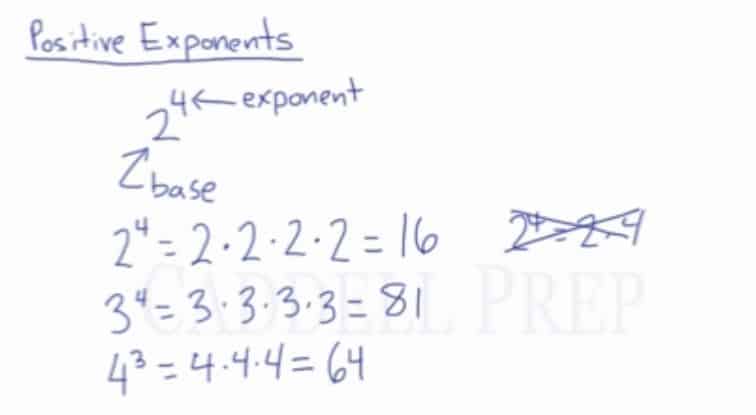
So we have to multiply the base by itself. The number of times you do it is what the exponent stands for.
If you see a term or variable raised to an exponent such as 
This only means that we have 


Just to review, we have the base and the small number at the top is the exponent.